When buying equipment for potatoes, carrots, ginger, radish, sweet potatoes or other root crops, you may see three similar terms used by equipment suppliers:
- Root vegetable washer
- Root vegetable polisher
- Root vegetable peeler
Although these machines may look similar, they do not necessarily produce the same result.
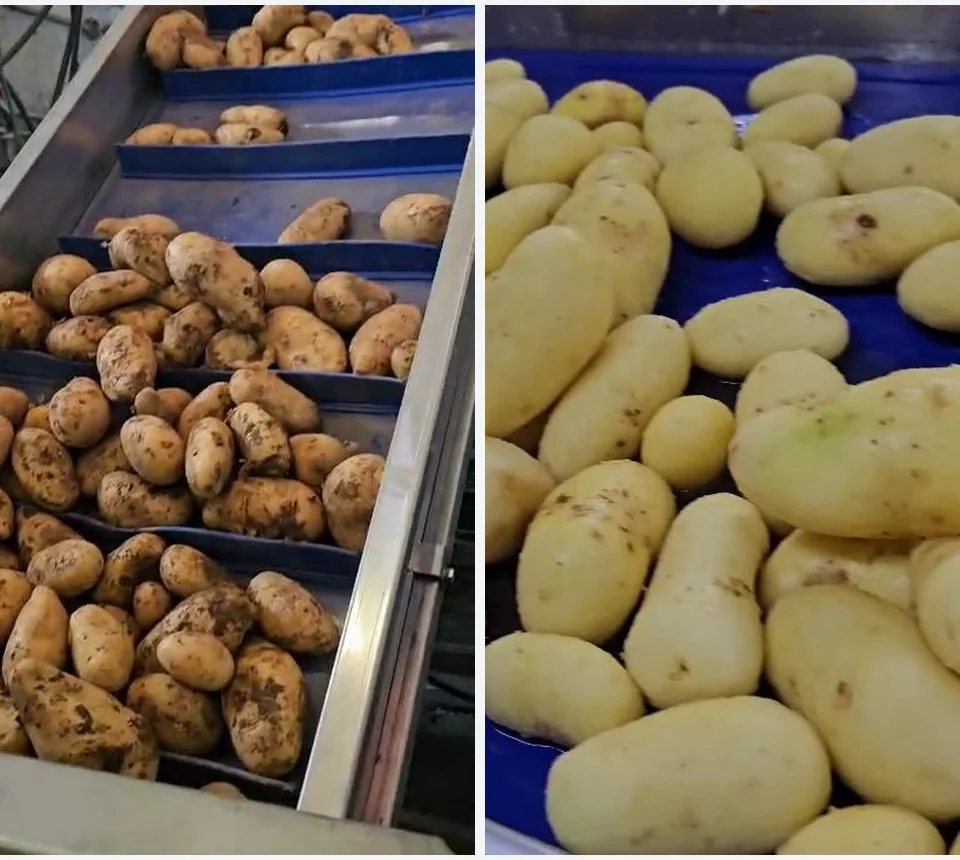
A washer is mainly designed to remove soil and surface contamination. A polisher provides stronger surface contact to improve the appearance and cleanliness of the vegetable, while a peeler is intended to remove part or all of the outer skin.
Choosing the wrong machine can result in insufficient cleaning, unnecessary product loss or additional processing steps.
This guide explains the differences and how to choose the right equipment for your processing line.
Quick Comparison: Washer vs Polisher vs Peeler
| Equipment | Main Purpose | Typical Surface Treatment | Best For |
|---|---|---|---|
| Root Vegetable Washer | Remove soil, mud and loose debris | Gentle to medium | Fresh-market vegetables and pre-processing |
| Root Vegetable Polisher | Deep surface cleaning and appearance improvement | Medium brush or roller contact | Potatoes, carrots, ginger and similar roots |
| Root Vegetable Peeler | Remove outer skin | Strong mechanical or peeling action | French fries, chips, frozen vegetables and further processing |
The important point is that these functions can overlap.
For example, a brush roller machine may wash vegetables while also producing a light polishing effect. Increasing brush hardness, contact time or abrasive action may remove more of the surface layer.
This is why equipment should be selected according to the required finished product, rather than simply according to the machine name.
For a complete overview of root crop processing, see our root vegetable washing solution.
What Is a Root Vegetable Washer?
A root vegetable washer is primarily designed to remove soil, mud, sand and loose surface contaminants while keeping as much of the original skin as possible.
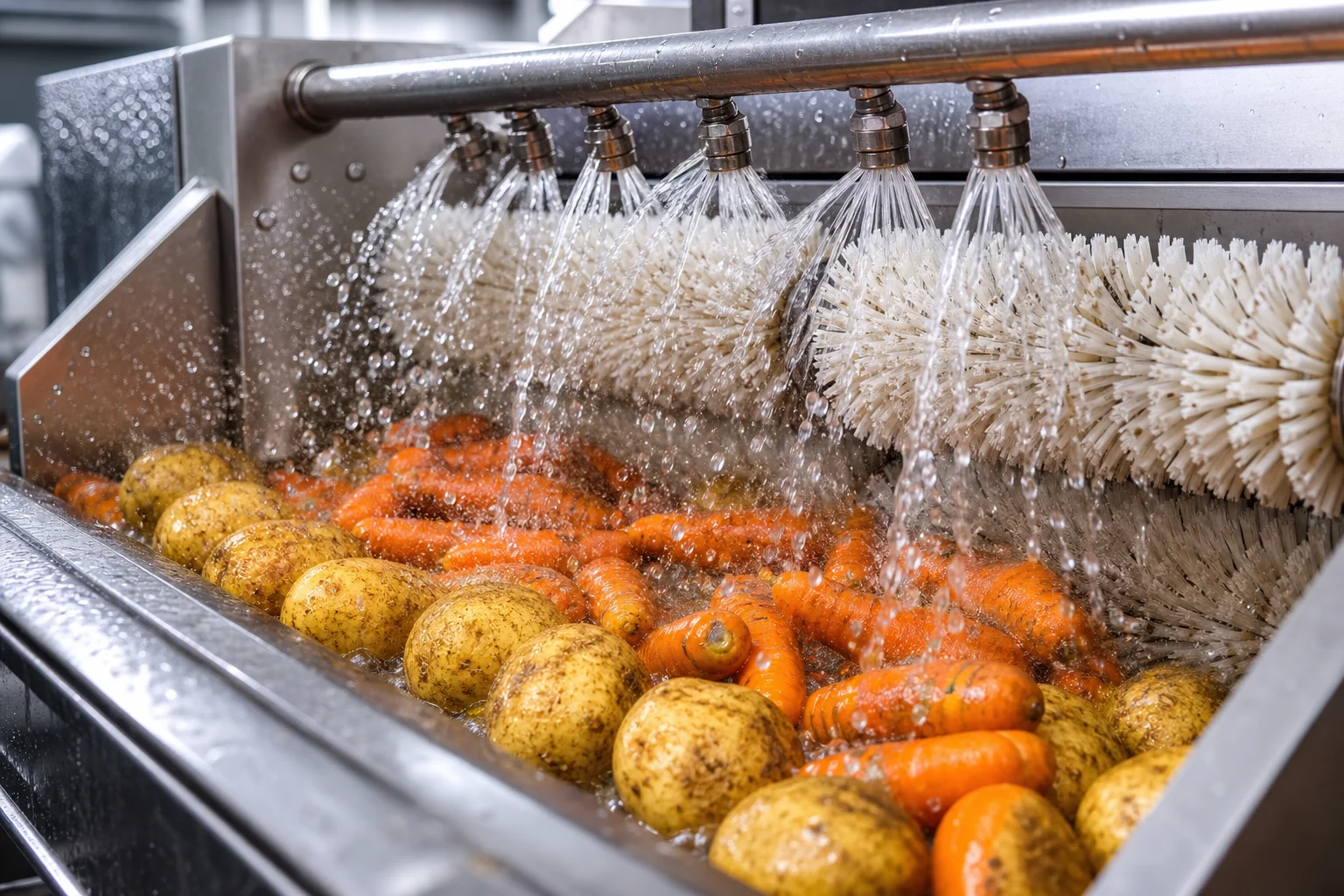
Root crops are more difficult to clean than many fruits or leafy vegetables because they grow in direct contact with soil.
Typical materials include:
- Potatoes
- Carrots
- Sweet potatoes
- Ginger
- Radish
- Taro
- Cassava
- Turmeric
- Beetroot
These vegetables may arrive at the factory with dry soil, sticky clay or dirt trapped in irregular surface areas.
For this reason, industrial root vegetable washing often uses a combination of:
- Feeding
- Optional soaking
- Brush or roller washing
- Spray rinsing
- Inspection
- Drying, peeling or further processing
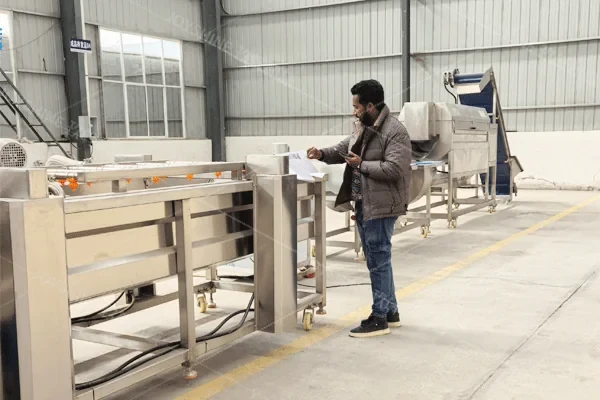
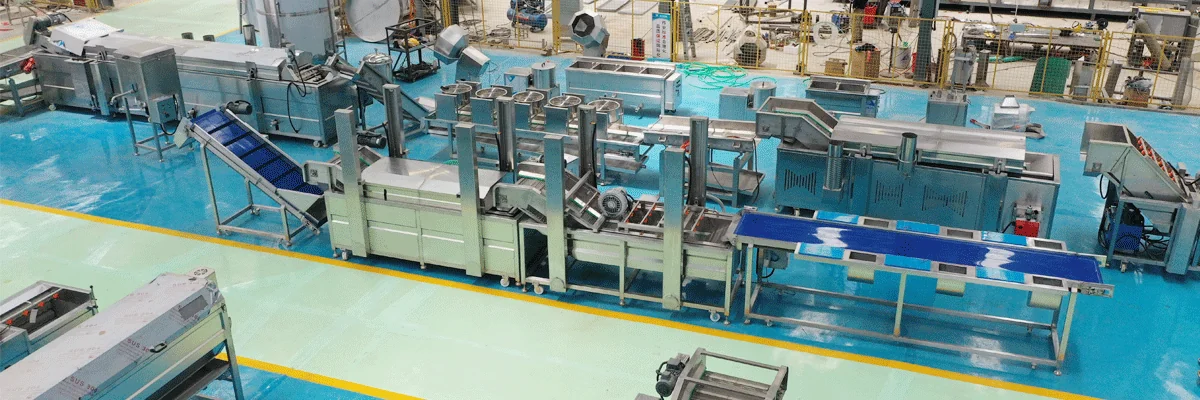
Joyshine's root washing and processing line can combine washing, spray rinsing, inspection, drying and optional peeling in one continuous processing system.
How Does a Root Vegetable Washer Work?
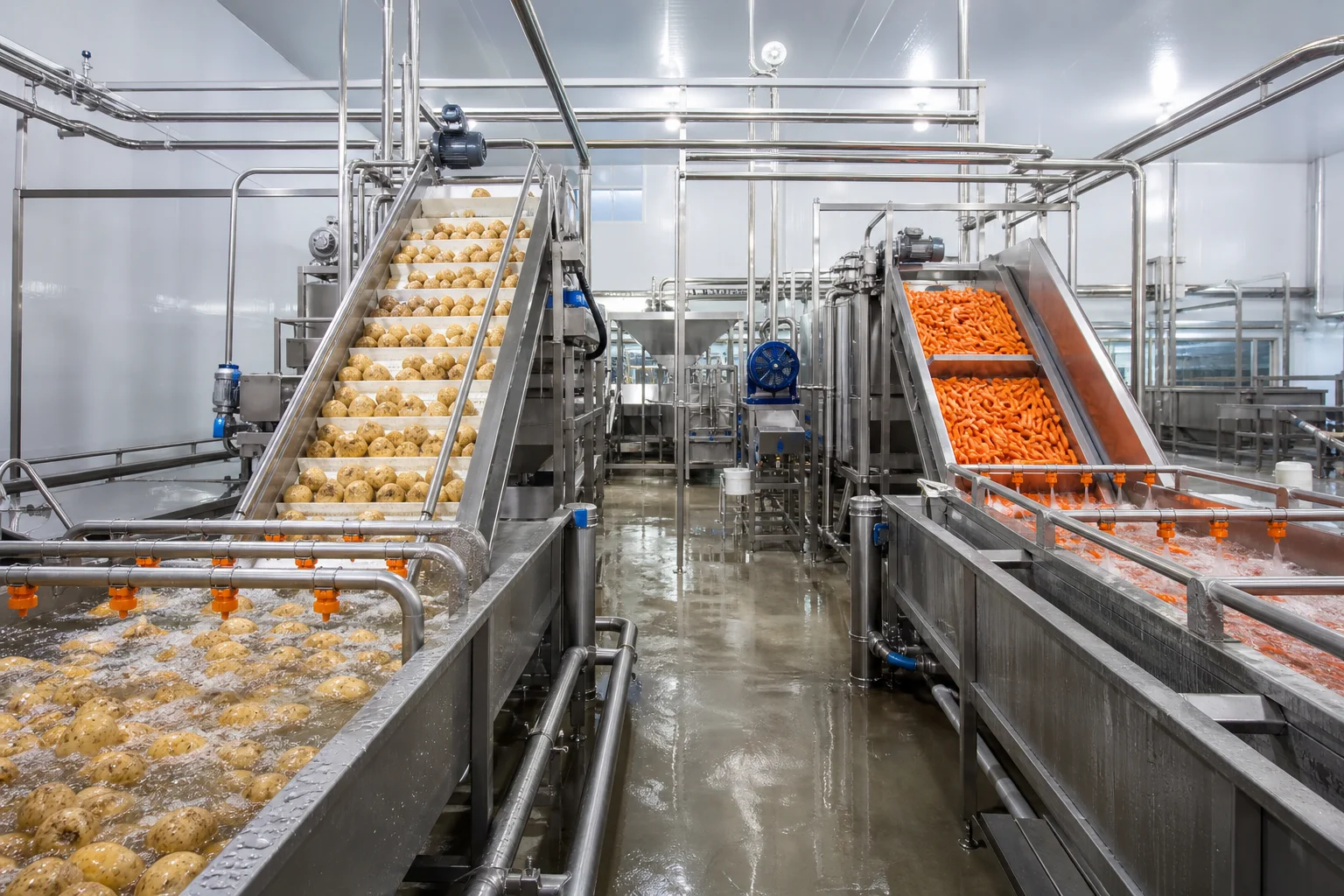
For soil-heavy products, rotating brushes or rollers create contact with the vegetable surface while water helps loosen and remove dirt.
A spray rinsing section can then remove loosened soil before the vegetables move to inspection or another processing stage.
Some applications may also use a high-pressure fruit and vegetable cleaning machine as part of the cleaning process.
However, stronger water pressure does not automatically mean better cleaning.
The correct washing method depends on:
- Vegetable hardness
- Amount and type of soil
- Surface shape
- Skin sensitivity
- Required final appearance
- Downstream processing requirements
For heavily soiled root vegetables, soaking and brush contact may be more effective than relying only on water pressure.
What Is a Root Vegetable Polisher?
The term root vegetable polisher is commonly used for equipment that provides stronger or more controlled surface contact than a basic washer.
Its purpose is usually to:
- Remove remaining soil from surface irregularities
- Improve the appearance of the vegetable
- Remove loose skin
- Reduce rough surface material
- Produce a cleaner and more uniform finish
In many processing plants, a polisher is not necessarily a completely separate type of machine.
Instead, the polishing effect may be achieved by changing:
- Brush material
- Brush hardness
- Rolter type
- Roller speed
- Contact time
- Water spray configuration
This is why terms such as root vegetable washer, brush washer, root crop polisher and vegetable polishing machine may sometimes describe similar equipment configurations.
Washing and Polishing Are Not Exactly the Same
A washer focuses mainly on removing contamination.
A polisher focuses more on surface finishing.
For example, if potatoes are sold as washed fresh potatoes in supermarkets, appearance may be very important. The processor may want not only to remove mud but also to produce a visually cleaner surface.
In this situation, brush polishing can be useful.
However, if potatoes are going directly into a French fries processing line, appearance before peeling may be less important. The priority may simply be efficient soil removal before the peeling stage.
Therefore, when requesting a quotation, it is better to describe your desired result instead of only asking for a "polisher."
We process fresh carrots and want to remove soil and loose surface material while keeping most of the natural skin.
This gives the equipment supplier much more useful information.
What Is a Root Vegetable Peeler?
A root vegetable peeling machine is designed to intentionally remove the outer skin or surface layer.
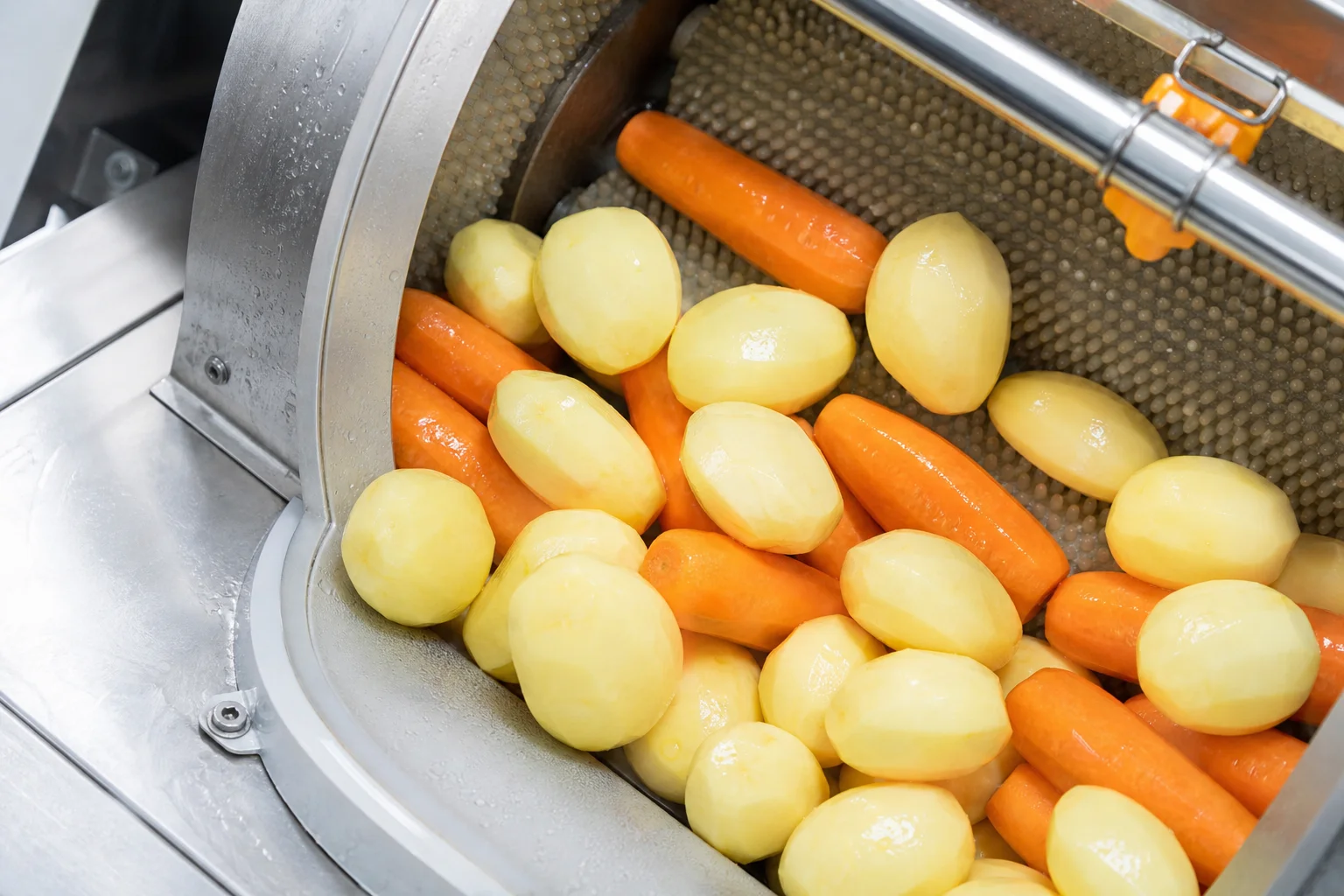
This is different from normal washing.
Peeling is commonly required when root vegetables will be processed into products such as:
- French fries
- Potato chips
- Cut vegetables
- Frozen vegetables
- Vegetable puree
- Dehydrated products
- Ready-to-cook products
Depending on the product and required peeling depth, industrial peeling may use mechanical, abrasive, brush or knife-based methods.
Joyshine provides a dedicated root vegetable peeling machine for root vegetable processing.
For potato applications, a combined potato washing and peeling machine can also integrate the washing and peeling stages.
Why Should Washing Usually Come Before Peeling?
Root vegetables may carry large amounts of soil when entering the factory.
If heavily soiled vegetables enter a peeling machine directly, the soil can make the process more difficult and increase contamination inside the equipment.
A more practical process is often:
Raw material → Pre-cleaning → Washing → Rinsing → Peeling → Final rinsing → Further processing
The exact sequence depends on the raw material and final product.
For some products, washing and peeling functions can also be combined in one machine.
Washer vs Polisher: Which One Do You Need?
The difference between washing and polishing is sometimes relatively small because both processes can use rotating brushes.
The main difference is the target result.
Choose Mainly Washing When:
- Vegetables have heavy soil or mud
- The natural skin should remain
- Products will be peeled later
- Cleaning is more important than appearance
- The machine is part of a larger processing line
For example, fresh potatoes for further processing:
- Feeding
- Pre-soaking
- Brush washing
- Spray rinsing
- Inspection
- Peeling / Cutting / Processing
In this application, the main objective is soil removal.
Choose More Polishing When:
- Finished appearance is important
- Products will be sold with the skin
- Loose surface skin needs to be removed
- More uniform surface cleaning is required
- Vegetables are being prepared for fresh-market packing
For example, fresh carrots for packing:
- Feeding
- Brush washing
- Polishing
- Fresh-water rinsing
- Inspection
- Drying
- Packing
The brushes and processing time should be selected carefully to avoid unnecessary product damage.
Washer vs Peeler: What Is the Main Difference?
This distinction is easier.
A washer should mainly remove dirt.
A peeler intentionally removes the vegetable skin.
If you process potatoes for fresh-market packing, you may only need washing and polishing.
If you process potatoes for chips or French fries, you will normally need both washing and peeling.
Fresh Potato Packing
- Receiving
- Washing
- Polishing
- Rinsing
- Grading
- Drying
- Packing
Potato Processing
- Receiving
- Washing
- Inspection
- Peeling
- Rinsing
- Cutting
- Further Processing
This is why a complete root vegetable washing and processing line is often modular rather than based on one universal machine.
Which Machine Is Best for Different Root Vegetables?
Different root vegetables require different levels of brush contact and peeling intensity.
Potatoes
Potatoes commonly carry significant amounts of soil.
For fresh potatoes, washing followed by polishing may be enough.
For French fries, chips or other processed products, the line will normally require:
Washing → Peeling → Cutting → Further processing
If you only require moderate capacity and want to combine two operations, consider a potato washing and peeling machine.
Carrots
Carrots often benefit from brush washing because soil can remain on their uneven surfaces.
Fresh-market carrots may require washing and light polishing while keeping their shape and surface quality.
Carrots intended for cutting, freezing or ready-to-eat processing may require an additional peeling stage.
Ginger
Ginger presents a different challenge because of its irregular shape and multiple branches.
Soil can remain in small gaps that are difficult to reach with simple spray washing.
Brush contact combined with water rinsing can help remove soil from these irregular surfaces.
The appropriate brush hardness should be selected carefully to avoid damaging the ginger.
Turmeric
Fresh turmeric has similar washing challenges to ginger.
A washing line may include:
Feeding → Washing → Brush cleaning → Rinsing → Inspection → Drying
If turmeric will later be dried and ground into powder, the cleaning stage should be designed around the downstream process.
Sweet Potatoes
Sweet potatoes can carry sticky soil but may also have relatively sensitive surfaces.
Very aggressive brushing can create unnecessary skin damage.
For this reason, brush type, speed and residence time should be tested with the actual raw material.
Radish and Beetroot
These vegetables can generally withstand brush washing, but the required surface finish will depend on whether they are being packed fresh or processed further.
Can One Machine Wash, Polish and Peel?
In some applications, yes.
Brush and abrasive roller machines can sometimes perform more than one function depending on their configuration.
However, trying to make one machine perform every task is not always the best solution.
There are several variables:
- Brush hardness
- Abrasive strength
- Roller speed
- Processing time
- Water flow
- Vegetable size
- Skin thickness
- Required peeling depth
A configuration that works well for potatoes may not produce the same result on ginger or carrots.
For higher-capacity factories, separating washing and peeling into dedicated stages can provide better process control.
For smaller factories or simple products, combined washing and peeling equipment may reduce the number of machines required.
How to Choose the Right Root Vegetable Processing Equipment
Before requesting a quotation, answer the following questions.
1. What Raw Material Are You Processing?
Do not simply write "root vegetables."
Specify whether you process:
- Potato
- Carrot
- Ginger
- Turmeric
- Sweet potato
- Radish
- Beetroot
- Taro
- Cassava
- Other root crops
If several materials will use the same line, list all of them.
2. How Dirty Is the Incoming Product?
There is a major difference between vegetables carrying:
- Light dry dust
- Loose soil
- Sticky mud
- Clay
- Stones and heavy debris
Very muddy root vegetables may require pre-soaking or stronger brush washing.
3. Do You Want to Keep the Skin?
This is one of the most important questions.
If the answer is yes, you probably need washing or controlled polishing rather than aggressive peeling.
If the skin must be removed, the supplier needs to know the required peeling result.
4. What Is the Final Product?
Equipment should be selected according to what happens after washing.
Examples include:
- Fresh vegetables for supermarkets
- Peeled vegetables
- Cut vegetables
- Frozen vegetables
- Potato chips
- French fries
- Dried ginger
- Vegetable powder
The same potato may require very different equipment depending on whether it will be packed fresh or processed into French fries.
5. What Capacity Do You Need?
Capacity should normally be expressed as:
kg/h of incoming raw material
Also tell the supplier:
- Daily operating hours
- Peak production requirement
- Product size range
- Number of product varieties
Joyshine provides configurable vegetable washing lines and processing machines for different raw materials and production capacities.
6. What Happens After Washing?
The downstream process determines the required discharge condition.
Possible next stages include:
- Peeling
- Cutting
- Drying
- Grading
- Freezing
- Cooking
- Packing
Machine outlet height, conveyor width and processing speed should therefore be considered as part of the whole line.