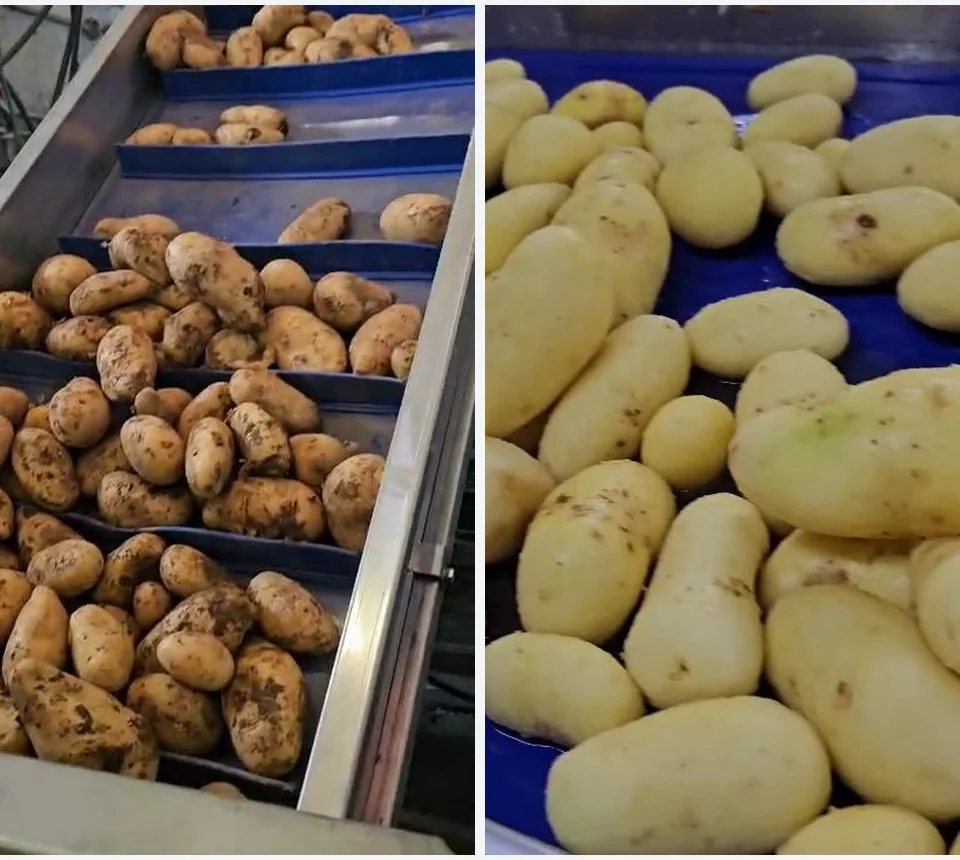
How does an industrial potato peeling line fit into a working processing plant? Footage filed under this Argentina project shows soil-marked potatoes on an inclined elevator and lighter, peeled potatoes moving along a blue inspection conveyor. A separate project test clip shows peeled potatoes on a conveyor. Together, these stills illustrate the feeding, peeling-output and inspection stages without requiring visitors to load a video.
Project at a Glance
- Location identified in the project files: Argentina.
- Raw material visible: potatoes with soil on their surfaces.
- Equipment named in the files: a spiral brush-roller potato peeler and a picking/sorting line.
- Stages visible in the footage: elevator feeding, peeled-product discharge and conveyor-based visual inspection.
- Source material: two customer-site clips and one project test clip. The machine interior, exact model and complete line layout are not visible in the selected stills.
This is a project view, not a specification sheet. A plant evaluating a similar potato washing and peeling machine should confirm its own incoming soil load, desired peeling finish and downstream handling requirements.
Feeding Potatoes into the Processing Line
The customer-site footage shows unpeeled potatoes on a cleated inclined conveyor. This transfer stage lifts product from the receiving area toward the next operation. The still makes the incoming condition easy to see: the potatoes vary in size and retain visible soil.
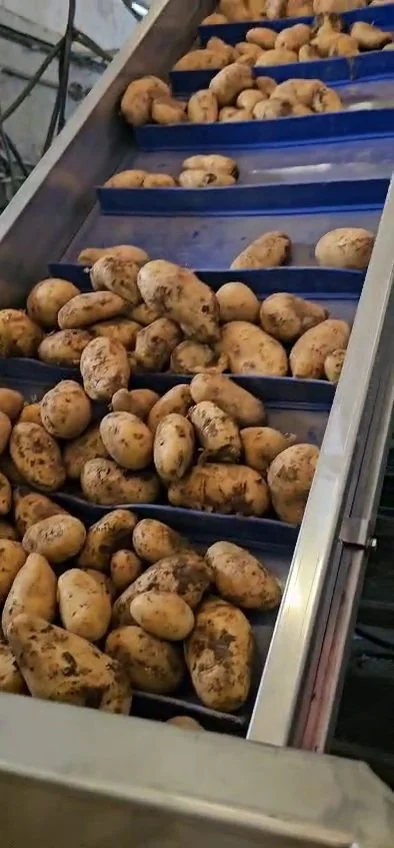
For potato processors, the required equipment depends on what the next stage must deliver. Washing removes soil; peeling removes skin; inspection identifies pieces that need further attention. Our washer, polisher and peeler comparison explains why these outcomes should not be treated as interchangeable.
Peeling Output and Inspection
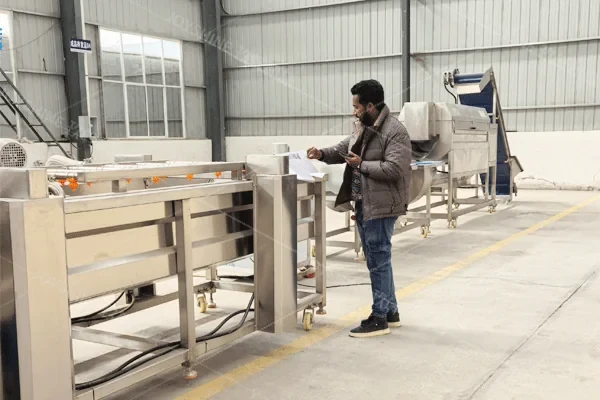
Another customer-site clip shows potatoes leaving an enclosed processing section onto a blue belt. The potatoes appear substantially lighter than those shown on the incoming elevator, although individual spots remain visible. A later view includes an operator working beside the belt. These images support a description of peeling output followed by visual inspection; they do not establish a measured peel-loss rate or the performance of every potato in the batch.
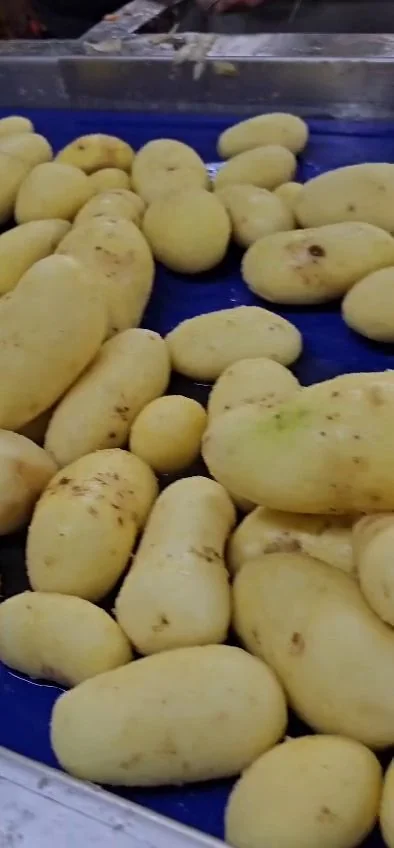
A picking line gives operators an opportunity to observe the output before the next production stage. If the target is a defined peel depth or a consistent finish across different potato sizes, buyers should test representative samples and agree on acceptance criteria rather than infer results from selected frames.
Project Test Footage
A separate project clip labelled as a test shows peeled potatoes spread across a blue conveyor. The still documents a visible product-transfer stage during testing; it does not show the internals of the spiral brush-roller unit or establish a rated hourly capacity.
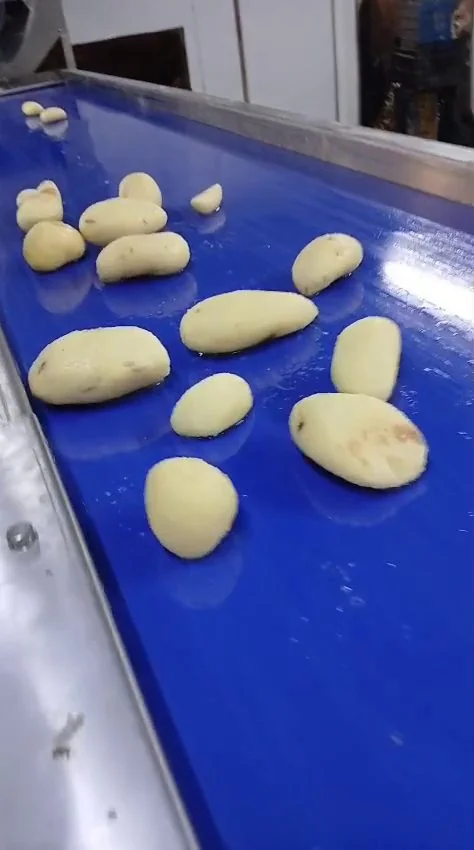
For a customized root washing and processing line, the practical questions are how raw potatoes enter the equipment, what finish is required after peeling, where inspection occurs and how product reaches the next step. The selected configuration should be confirmed against actual crop samples and the factory layout.
What to Confirm for a Similar Potato Peeling Project
Before requesting a line proposal, prepare the following information:
- Incoming potato varieties, size range and typical soil condition.
- Whether the end product is for fresh packing, cutting, frying or another process.
- Required peeling result, acceptable remaining skin and acceptable product loss.
- Target throughput expressed as incoming raw potatoes per hour, with operating hours and peak demand.
- Available floor space, transfer heights and whether manual inspection is needed.
The Argentina footage illustrates a real sequence of handling and output, but it should not be used as a guarantee for a different crop or factory. Contact Joyshine with your raw material, target output and workshop layout to discuss a suitable potato peeling and inspection arrangement.
Frequently Asked Questions
Does the footage show the spiral brush-roller mechanism?
No. The project filename identifies the equipment that way, while the selected stills show the elevator and product on conveyors. The internal peeling mechanism and its settings would need separate technical documentation.
Is the hourly capacity of this specific line verified?
Not by the video frames. A rated capacity should be confirmed from the project's technical agreement or an appropriately documented production test.
Can the same arrangement be used for every potato variety?
The necessary feeding, peeling and inspection settings depend on potato size, skin condition and the required end product. Test the actual raw material before finalizing a configuration.