Industrial leafy vegetable washing is a sequence, not a single tank. Lettuce, spinach, kale and fresh herbs can carry sand inside folds while their leaves remain sensitive to mechanical handling. Bubble washing loosens and separates contamination; rinsing clears loosened material; dewatering reduces surface water before the next production step. Each stage needs a distinct purpose and a setting tested with the actual crop.
This guide explains how to connect these three stages into a practical process for whole leaves and fresh-cut salad vegetables. It concentrates on equipment functions and line planning; for broader buying considerations, see our salad washing line selection guide.
Map the Line Before Choosing Machines
Begin by identifying the incoming material: whole lettuce heads, separated leaves, cut salad mix, spinach or herbs. Record the soil load, average leaf size, cutting state, required throughput and destination after washing. A whole head can hide material near its core, whereas small cut leaves may accumulate at a transfer or carry water into packaging.
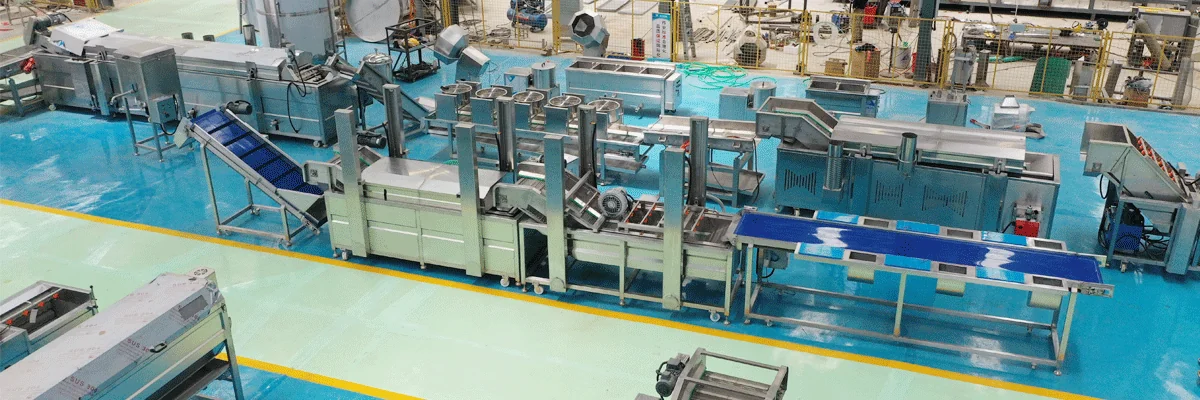
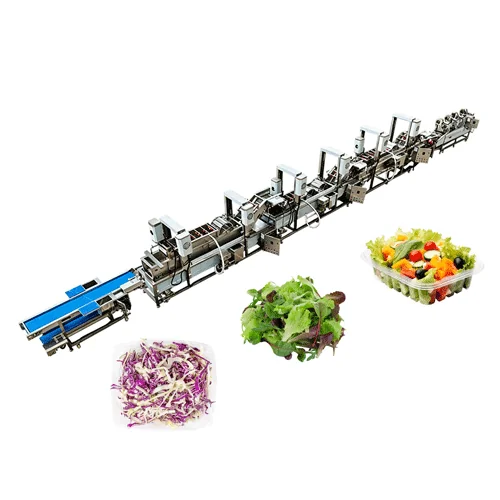
A common planning sequence is receiving and sorting, controlled feeding, bubble washing, fresh-water rinsing, inspection and surface-water removal. The Joyshine leafy vegetable washing solution describes this modular arrangement; cutting, additional washing or other stages can be positioned according to the finished product. No single layout is automatically suitable for every salad plant.
Bubble Washing: Release Soil While Keeping Leaves Moving
In a bubble washer, moving water and air agitation encourage leaves to separate and turn. That motion can expose folded surfaces and loosen sand or light debris. A conveyor then moves the material toward discharge. The process is adjustable, but a more violent tank is not necessarily a cleaner one: leaves crowded against a wall or conveyor can wash unevenly and become damaged.
During a product trial, observe feed density, air input, water circulation, conveyor speed and residence time. Check whether leaves circulate through the tank rather than forming dense rafts. Compare samples at the inlet and outlet for soil still trapped between folds. Change one parameter at a time when possible, and verify that a cleaning improvement does not create unnecessary torn edges.
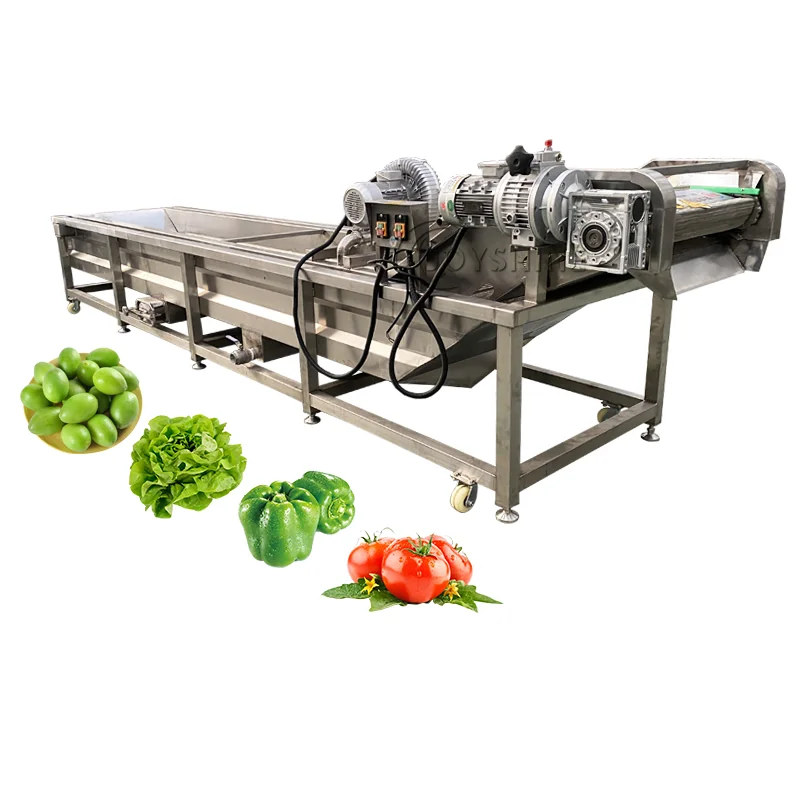
A configurable bubble washing machine can include an adjustable mesh conveyor, water circulation and a spray outlet. The supplier should match its configuration to the actual leafy material, rather than infer a universal setting from a model's nominal throughput.
Rinsing: Remove What the First Tank Has Loosened
Bubble washing performs the main soil-release work. However, loosened particles and wash water may still leave the tank on the crop. A separate rinsing section directs water across the leaves before inspection or dewatering. Assess nozzle coverage on overlapping leaves and the contact force where the spray strikes the product; simply raising pressure can increase handling stress without improving access to hidden surfaces.
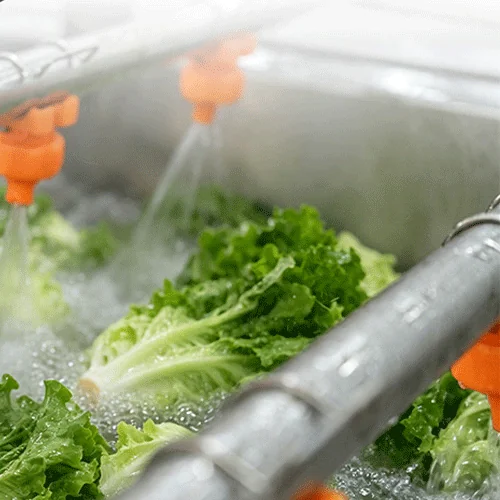
If the main tank recirculates water, specify the source and management of final-rinse water separately. Filtration can remove collected solids from a water circuit, but it does not by itself establish food safety or replace an appropriate final rinse. Set cleaning schedules and water-quality controls according to applicable plant requirements. Compare leaf samples before and after rinsing to confirm the extra stage is doing useful work.
Dewatering: Prepare Clean Leaves for the Next Operation
Clean leaves can still carry too much water for weighing or packing. Dewatering aims to reduce surface moisture; it is not the same thing as heat drying. A line may use a draining belt, controlled vibration, air flow or several stages in sequence. The best arrangement depends on leaf shape, whether the product is cut, and the downstream step.
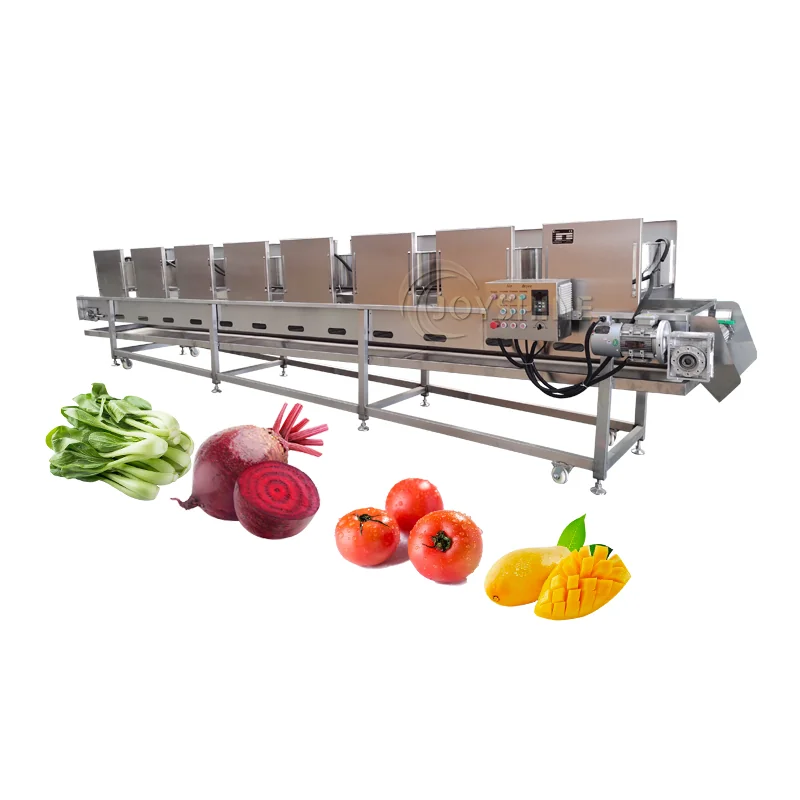
On its fresh-cut vegetable washing line, Joyshine lists vibration dewatering and optional air-knife drying modules. Both the transition between machines and the intensity of water removal deserve testing. Look for leaves trapped in belt gaps, large drops at discharge, excess residual water and visible tissue damage. An air-drying machine photographed for mixed produce is an equipment example, not proof that a given setting suits loose lettuce.
Compare the Stages During a Trial
| Stage | Primary job | Trial checks |
|---|---|---|
| Bubble washing | Separate leaves and loosen sand | Turnover, crowding, remaining debris, damage |
| Rinsing | Flush loosened particles | Coverage, water arrangement, leaf condition |
| Dewatering | Reduce surface water | Residual moisture, transfer losses, bruising |
Take representative samples before washing, after the tank, after rinsing and after dewatering. Record throughput and settings alongside cleanliness, visible damage and surface water. A cleaner crop with excess water may still create a packing bottleneck; a dry crop with damaged leaves is not a successful result either.
The Argentina salad washing project demonstrates how bubble washing and air drying can connect in a continuous workflow. Its configuration reflects a particular application, not a guaranteed production result for another crop or factory.
Frequently Asked Questions
Can bubble washing replace a separate rinse?
Not automatically. The tank loosens and removes much of the debris, while a subsequent rinse can remove particles or wash water still carried by the leaves. Test samples and follow the plant's hygiene plan.
Must every leafy vegetable line include air drying?
No. The required surface-water level depends on the product and next step. Confirm whether draining or controlled dewatering meets the need before adding an air stage.
Can whole lettuce and cut leaves use the same settings?
They should be tested separately. Their dimensions and surface area affect tank movement, rinsing coverage, water retention and conveying.
What should I send for a line proposal?
Provide crop varieties, whole or cut state, representative photos or samples, soil condition, desired throughput, workshop layout and the required condition before packing or cutting.
Plan the Complete Leafy Washing Process
Bubble washing, rinsing and dewatering solve connected but different problems. Specify and trial them together so one stage does not undo the work of another. Contact Joyshine with your raw material and target output to discuss a line layout and sample-testing plan.