Before a vegetable washing line leaves the factory, a useful inspection should answer more than “does the machine turn on?” Buyers need to see how the proposed process handles their raw material, how machines connect, which settings can be adjusted, and what will actually be packed. A visit or witnessed test is an opportunity to settle these questions while the equipment and engineers are still together.
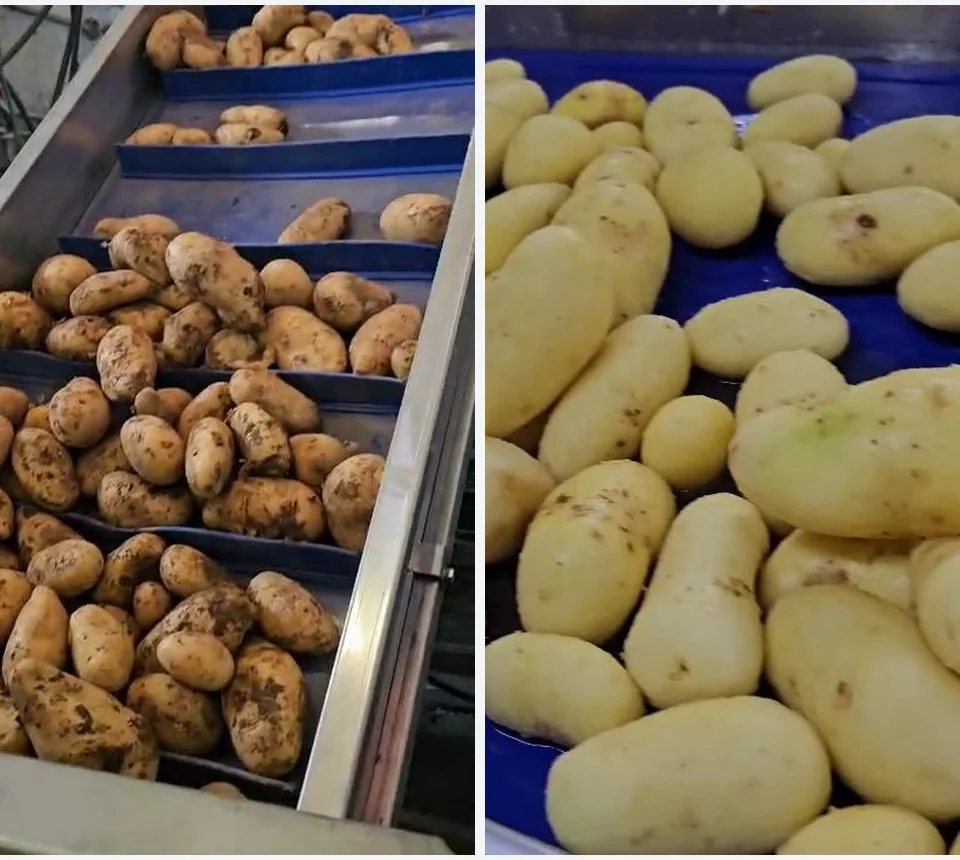
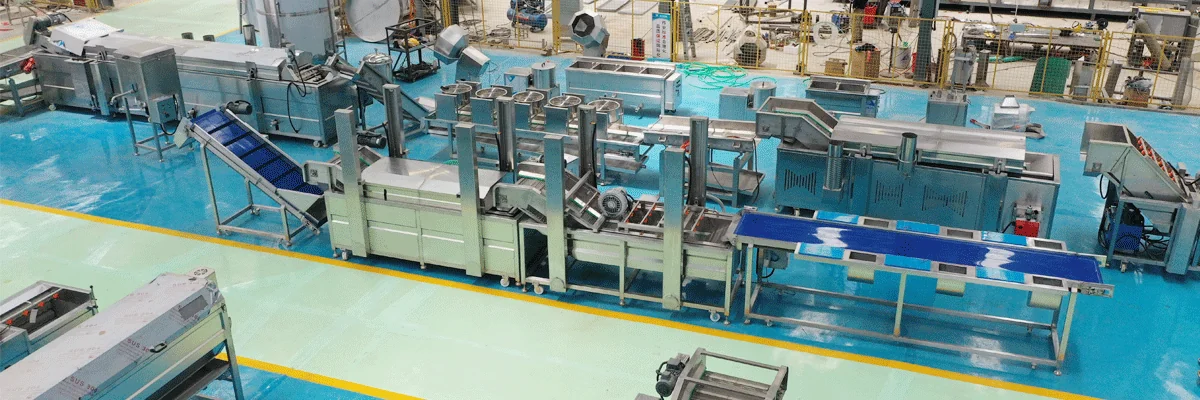
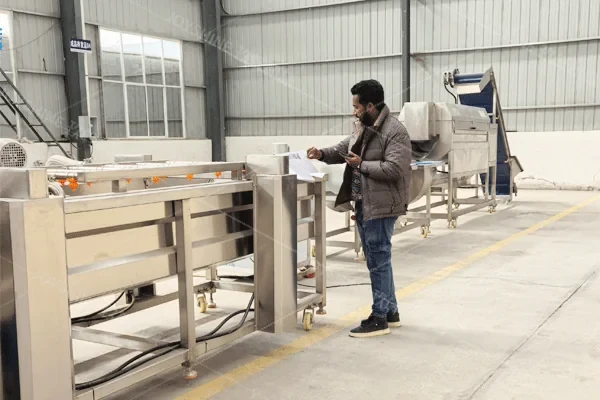
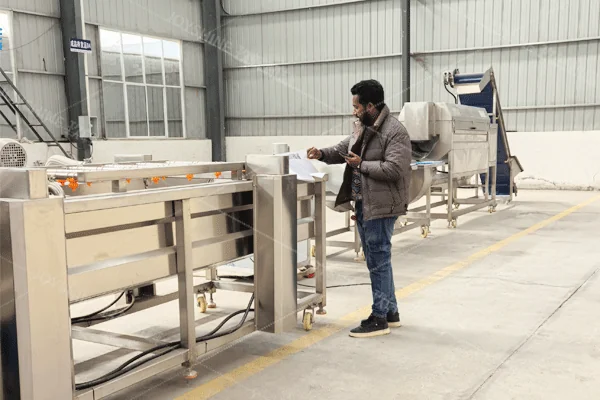
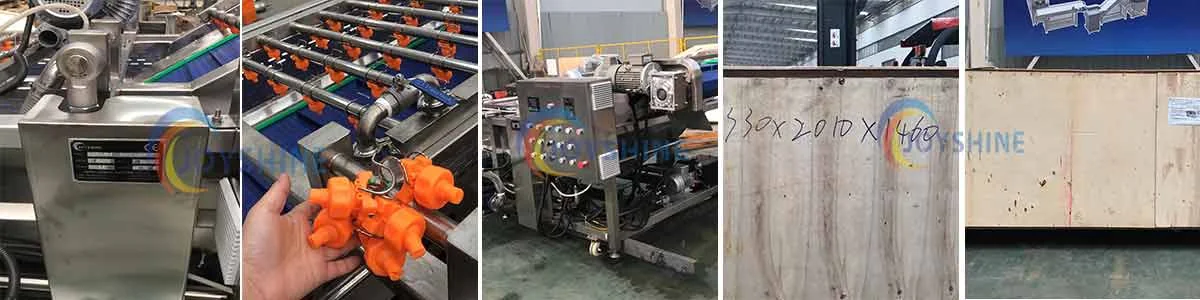
The photographs below are genuine images published on Joyshine's earlier website. They document different projects, not a single customer's inspection-to-shipment sequence. One shows an on-site customer review of a potato-processing line, another shows mushroom washing and sorting equipment, and the third shows vegetable-washing equipment alongside a shipping crate.
1. Agree on an inspection plan before the visit
Send the supplier your material description, expected hourly throughput, incoming soil level, product fragility, available floor space, utilities, and desired condition at the line exit. Ask for a process flow and a numbered equipment list. Decide whether the acceptance test will use your own produce, a representative substitute, water alone, or a dry mechanical run. These tests are not equivalent: a water-only test cannot prove cleaning performance on a difficult crop.
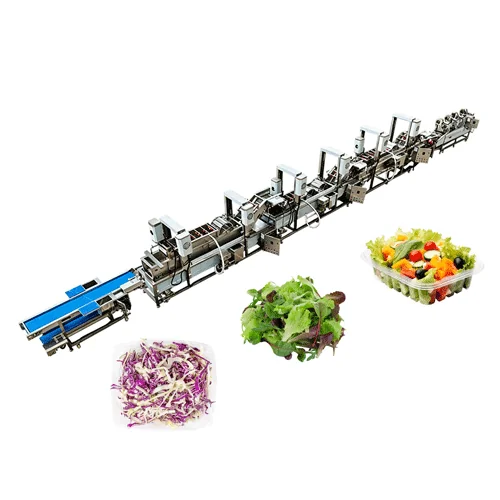
For a mixed-produce line, the process may include feeding, sorting, bubble washing, spray rinsing, dewatering, air drying, and packing. The exact stages should follow the material and specification, not a generic diagram. Compare the proposed sequence with Joyshine's fruit and vegetable washing and drying line and its individual machines before agreeing on a test scope.
2. Follow the product, not just the nameplates
At the factory, walk the material route from the inlet to the discharge. Look for transfer heights that might bruise produce, access around tanks and conveyors, drainage points, guards, and places where material could accumulate. Ask the engineer to explain how water circulation and fresh-water rinsing are separated in the proposed layout. The relevant question is whether the configuration works for your material and workshop—not whether a demonstration line looks impressive.
A documented customer visit on the earlier Joyshine website describes an on-site review of washing and slicing operations for a potato-chip project. That is a distinct project from a vegetable-washing-line order, but it illustrates a useful practice: inspect working stages and ask about maintenance and adjustability while the machines are available for demonstration. For delicate crops, the leafy vegetable washing solution offers a different process context from a root-crop washer.
3. Request a meaningful trial and record the result
If practical, define a test batch and record its source, approximate incoming condition, operating settings, observations at each stage, and the condition at the outlet. Photograph both the machine arrangement and the product before and after processing. A trial should cover the issues that matter to your line: visible soil, leaf damage, carryover water, transfer losses, or the consistency of downstream handling. Do not treat a short demonstration as proof of a guaranteed commercial throughput or a food-safety outcome.
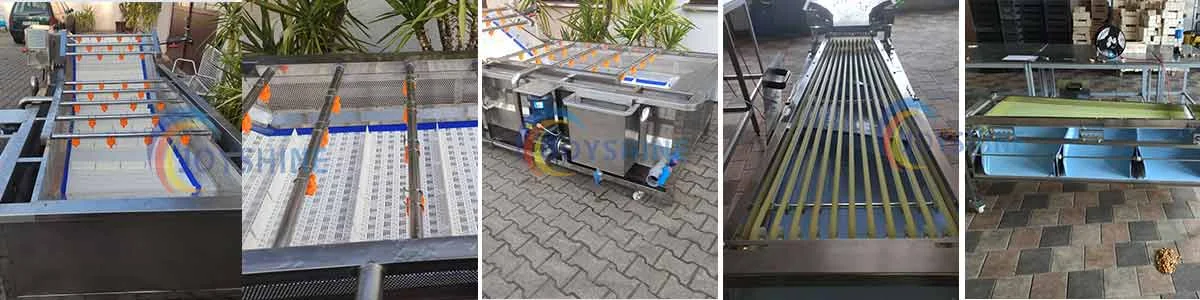
For delicate products such as mushrooms, photograph supports and transfer points as well as the washing section. For roots with adhering soil, discuss how the cleaning stage differs from a gentle leaf-washing setup. The root vegetable washing solution and bubble washing machine pages are useful starting points, but final settings must be verified with sample material.
4. Check configuration, records, and packing together
Before release, compare the photographed equipment against the agreed layout and equipment list. Confirm what is included: conveyors, pumps, controls, optional sections, spare parts, and any loose components. Ask for available test records, operating instructions, electrical information, and an agreed packing list. Verify how each crate or loose item is identified and which parts require protection during transport. A photograph of a crate is evidence of a packing stage, not proof by itself that every ordered item was shipped or delivered.
5. Make the acceptance decision explicit
Use a brief written record that names the machine or line, test material, observed result, any open issue, responsible person, and agreed follow-up date. Separate observations from acceptance: a product photograph may document appearance, while the signed configuration and test record document what was checked. If a trial cannot be run with the buyer's actual material, state that limitation rather than implying it passed.
Quick questions to send before travelling
- Which machines and modules will be assembled for the inspection?
- Can the test use our product, and what batch is needed?
- What settings can we adjust and record during the trial?
- Which line sections will be packed separately?
- What records and packing documents can we review before dispatch?
Conclusion
A sound pre-shipment inspection ties together the material trial, equipment configuration, documentation, and packing list. Genuine factory-visit and shipment photos make the discussion concrete, but each photograph needs its own project context. Send your crop, target output, and workshop layout through Joyshine's contact page to plan a relevant inspection and a practical line proposal.