How much does an industrial vegetable washing line cost? There is no defensible single price for every factory. A bubble washer supplied alone, a connected wash-and-rinse line, and a complete system with sorting, cutting, dewatering and packing are different purchases. The crop, required hourly throughput, hygiene plan and installation scope determine what belongs in the quotation.
Rather than treating an unsourced online figure as a firm price, use this guide to define a comparable equipment scope and calculate total project cost. Joyshine's product pages describe configurable modules and capacities, but do not publish a binding price for the exact line your plant needs. Request a written, itemized quotation for your own raw material and layout.
Short Answer: Price the Scope, Not Just the Washer
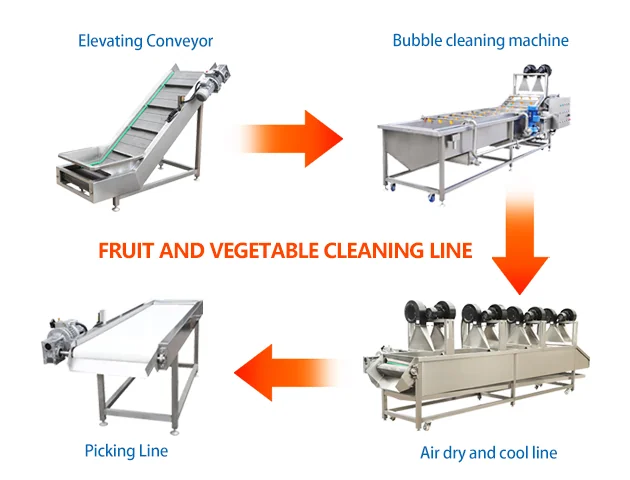
The purchase price usually changes with line length, conveyor width, capacity, washing method, the number of tanks and downstream modules. A facility that only needs to rinse whole vegetables will not specify the same equipment as a fresh-cut salad plant that must sort, wash, rinse and reduce surface water before packing. Optional filtration, controls and factory-specific transfer heights also change the scope.
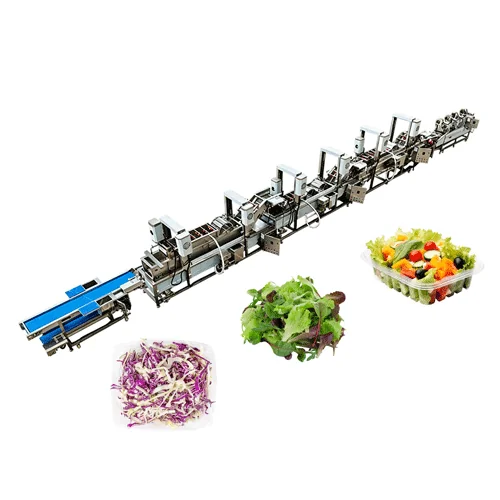
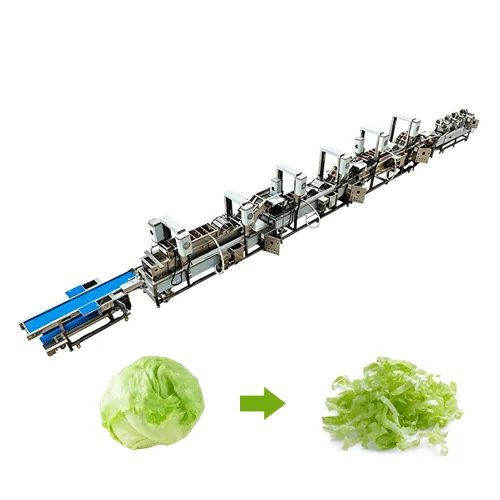
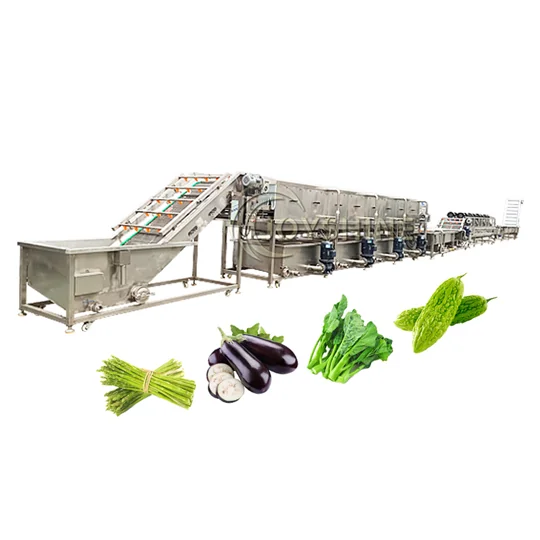
For example, Joyshine's fresh-cut vegetable washing line lists feeding, sorting, bubble washing, spray rinsing, dewatering and optional air drying in a modular process. Its published capacity information describes possible configurations, not a fixed price or a promise that every installation includes every stage. A root washing and processing line may instead need brush washing, inspection or peeling-related transfers for soil-heavy crops.
Which Equipment Decisions Change the Quotation?
| Decision | Lower-scope example | Additional scope to price |
|---|---|---|
| Crop and contamination | Loose soil on sturdy produce | Pre-soak or brush contact for sticky soil; gentle handling for leaves |
| Throughput | One washer at a defined input rate | Wider conveyors, longer tanks or parallel sections |
| Wash and rinse | Main wash with basic discharge | Dedicated fresh-water rinse, filtration or extra tank |
| Downstream condition | Wet product for another process | Inspection, dewatering, air drying or packing interface |
| Controls and layout | Standalone machine | Integrated conveyors, control cabinet and plant-specific geometry |
The table explains how to compare configurations; it is not a price list. Equipment suppliers should specify what is included, what is optional and what performance will be tested with your product.
Raw Material and Washing Method
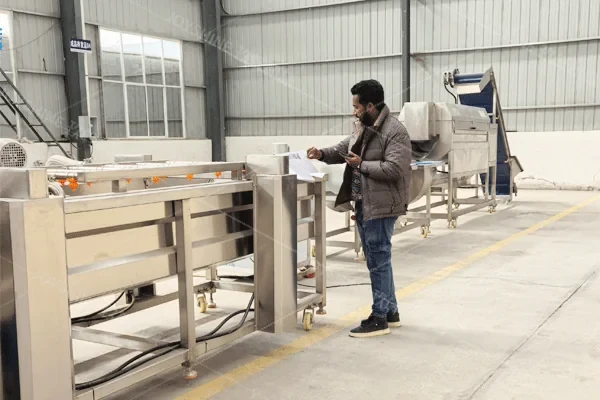
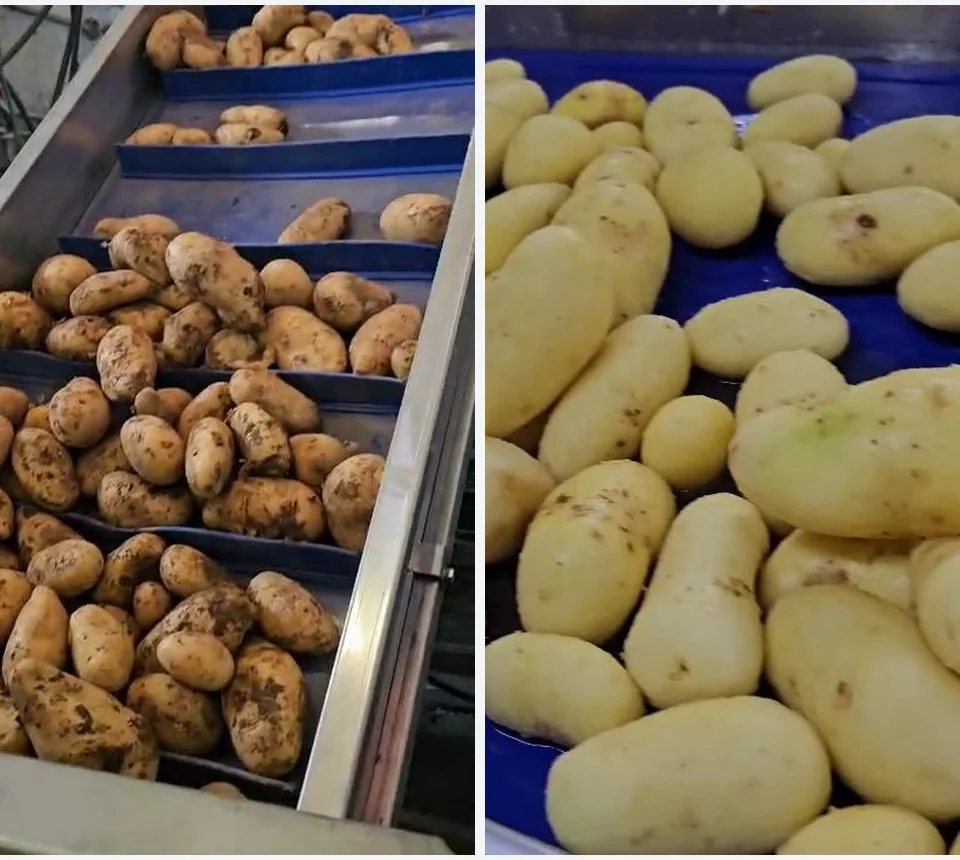
Leafy vegetables require controlled bubble movement and careful transfers. Muddy potatoes and carrots may require stronger soil removal with brushes, rinsing or pre-soaking. A supplier cannot select one universal washer on the basis of hourly tonnage alone. Send representative photos or samples of the crop and indicate whether skin, leaves or cut edges must remain intact.
Input Capacity and Automation
Define capacity as incoming kilograms per hour, operating hours per day and expected peak feed. Also state whether workers will sort by hand, whether the line must connect to a cutter, and whether the discharge must reach an existing conveyor. A higher nominal washer capacity is not useful if inspection or drying cannot keep up.
Water Handling and Surface-Water Removal
Ask whether the proposal includes circulating-water filtration, a separate final rinse, drainage, dewatering and an air-drying module. The right choice depends on the site's hygiene requirements and the condition required before packing. These features affect equipment, plumbing and ongoing utility needs; a low initial equipment price may omit them.
Include Costs Beyond the Equipment Invoice
Before approving a budget, request an itemized total that distinguishes machines from shipping and site work. Confirm who supplies the electrical connection, water supply, drains, foundations or floor changes, installation labor, commissioning, operator training and spare parts. Customs, taxes and delivery terms depend on the destination and contract: do not assume they are included in an equipment-only offer.
Operational costs also matter. Record expected water and electricity use for the proposed configuration and calculate staffing, cleaning time, replacement parts and product loss under your own operating conditions. Compare proposals on the same capacity, output quality, module list, delivery terms and after-sales scope, not just the headline machine total.
Request Comparable Quotations in Five Steps
- Describe the crop: list vegetables, varieties, size range, contamination and required finished condition.
- State the output: specify incoming kg/h, shift hours, peak load and the next production step.
- Mark the boundaries: identify which equipment already exists and where the new line starts and ends.
- Ask for an itemized scope: request equipment, options, layout drawing, utility requirements, delivery basis and installation terms separately.
- Agree on a test: ask how washing performance, handling damage and surface moisture will be judged with representative material.
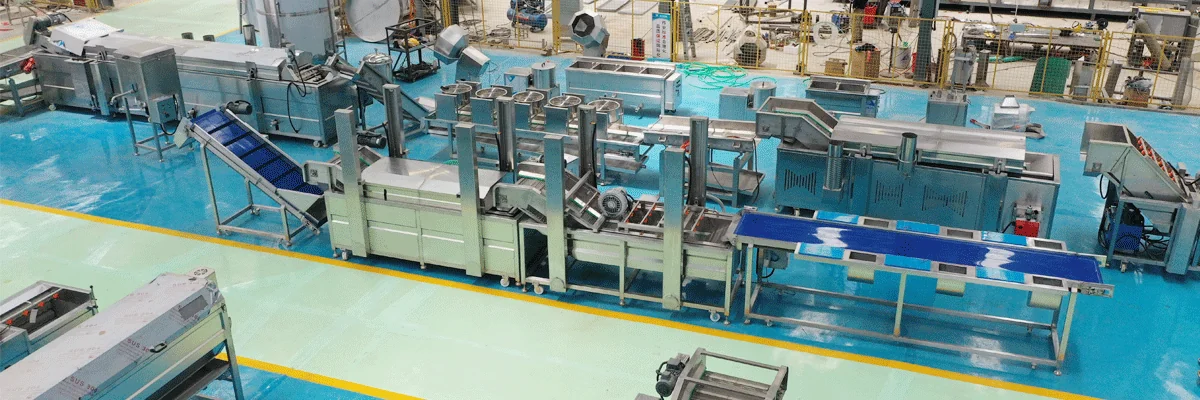
Joyshine's bubble washing machine can be a starting point for a simpler wash stage, while an integrated vegetable line may add several modules. An image of a line is not a fixed bill of materials: check the proposal rather than assuming each pictured component is included.
Frequently Asked Questions
Can I get a reliable price without telling the supplier which vegetables I wash?
Only a preliminary, explicitly scoped estimate is possible. Crop shape and fragility determine how the washer and transfers should be configured. A firm offer requires more detail about raw material, capacity and process boundaries.
Does a higher kg/h rating always mean a more expensive line?
Not by itself. Capacity interacts with conveyor width, process stages, automation and layout. Compare the sustained throughput for your actual crop and the same included equipment.
Is a single bubble washing machine a complete washing line?
Not necessarily. A full production system may include feeding, sorting, rinsing, inspection, dewatering and transfers to packing. Identify which stages your factory genuinely needs.
Should I include operating costs when comparing offers?
Yes. Review water, electricity, labor, cleaning, maintenance and product losses for the proposed configuration. Ask for assumptions and test evidence instead of treating a generic operating-cost figure as a guarantee.
Get a Quote for Your Actual Plant
The answer to “how much” is an itemized design and commercial offer, not a universal number. Define what goes in, what comes out and what equipment the supplier is responsible for. Send Joyshine your crop, photos, target input rate and workshop layout to request a configuration and a comparable quotation.