Lettuce and other leafy vegetables can tear, bruise or lose their crisp appearance when a washing line is too rough. The goal is not simply to use less water or fewer washing stages: it is to remove soil and loose debris while controlling each impact, transfer and drying step.
This guide explains how food processors can reduce visible leaf damage when washing whole lettuce, cut lettuce, spinach and mixed salad leaves. Settings should be tested on the actual crop; no single bubble intensity or conveyor speed suits every variety.
Where Does Leaf Damage Start?
Damage can begin before the washing tank. Leaves may be crushed by deep piles in a receiving bin, torn during rough trimming or dropped from a conveyor into water. Inside the washer, overcrowding and turbulent movement can cause leaves to rub against one another or the machine. Excessively forceful spray and harsh discharge can add damage after the main wash.
Cut lettuce deserves particular attention because its cut edges are exposed. For whole heads, the outer leaves and the junction around the core may retain dirt while the more delicate edges suffer abrasion. Therefore, assess both cleanliness and product condition at several points—not only at the final outlet.
Build a Gentle Washing Sequence
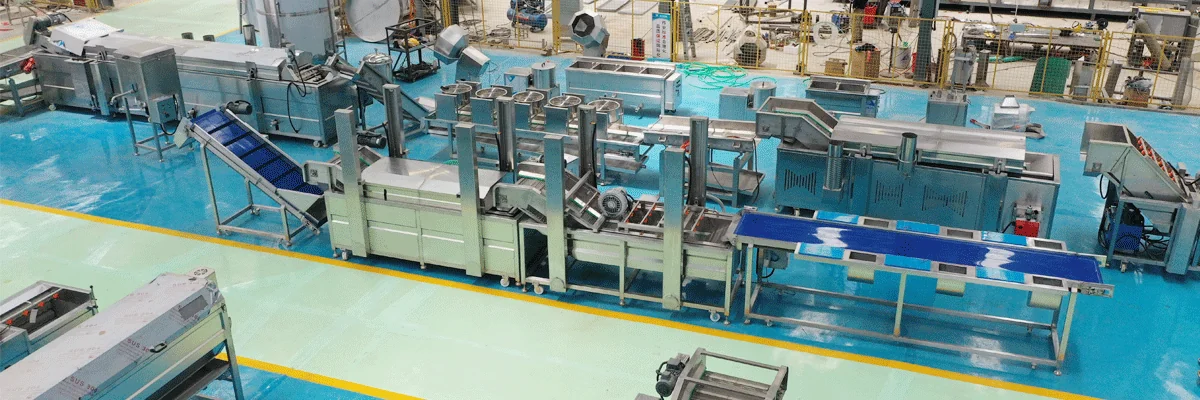
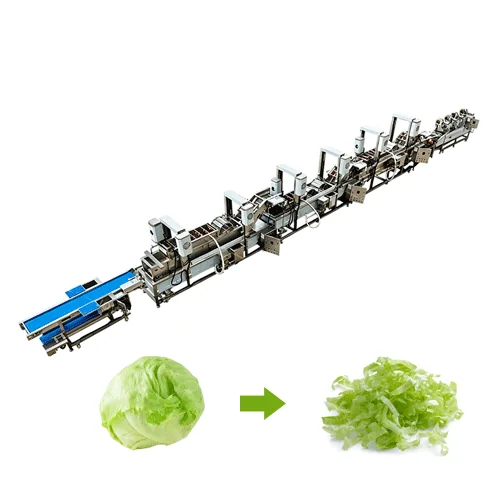
A practical line can include sorting, controlled feeding, bubble washing, a fresh-water rinse, inspection and suitable surface-water removal. Joyshine's leafy vegetable washing solution describes this modular approach; the exact order of cutting and washing depends on the finished product.
1. Sort and Feed Without Compressing the Leaves
Remove heavily damaged leaves and foreign material before the wash. Spread material evenly across the conveyor rather than feeding it in dense clumps. Check the drop height from the feeding belt to the water and between machines: a smooth transfer is often as important as the wash tank itself.
If the plant handles whole heads and chopped salad leaves on the same line, test them separately. Smaller cut pieces can circulate and collect differently from whole leaves, so the same loading rate may not deliver the same result.
2. Tune Bubble Agitation to the Crop
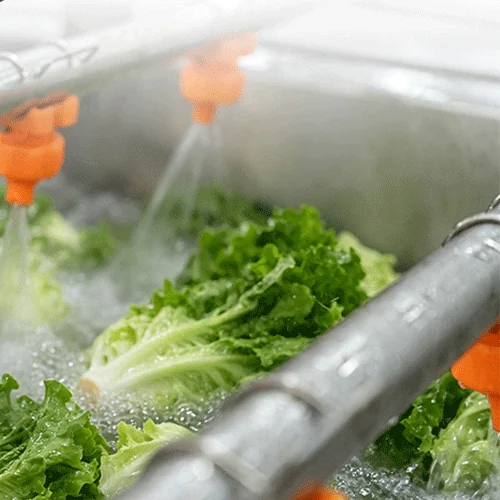
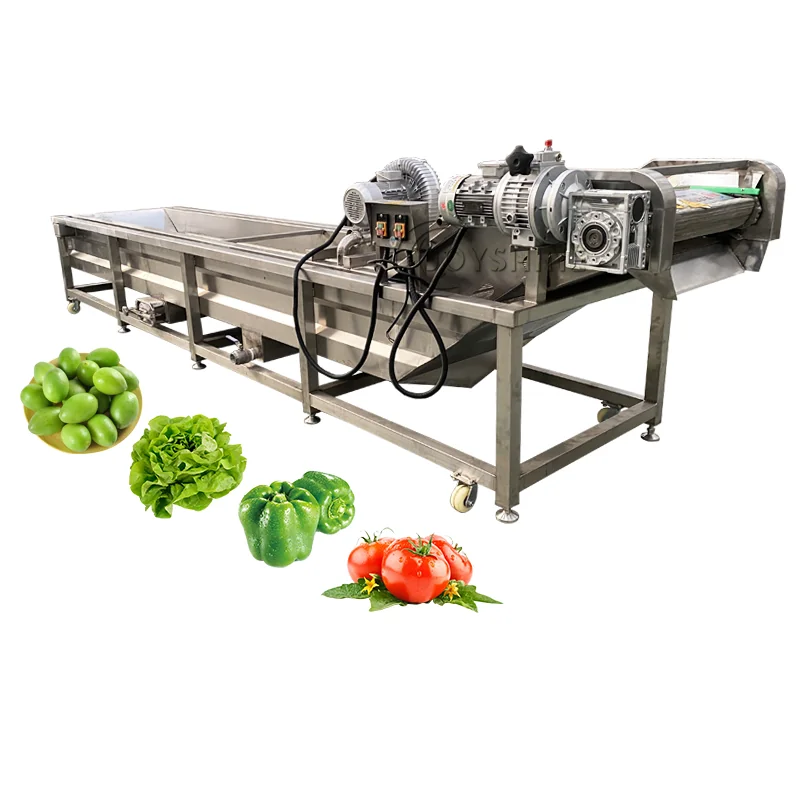
In a bubble washer, rising air and moving water separate leaves and help release soil trapped in folds. The aim is enough movement for turnover and cleaning without repeatedly driving leaves against hard surfaces. Start with a gentle setting and increase it only if soil removal requires it.
Observe the tank during a trial. Do leaves move through the water, or are they pressed into corners? Are pieces repeatedly colliding at the discharge? Adjust air flow, water flow, residence time and feed density together. A bubble washing machine with adjustable conveyor speed offers useful process control, but machine settings still need crop-specific validation.
3. Rinse Without a Harsh Spray Impact
A subsequent rinse can remove loosened debris before inspection. Position the nozzles to cover the leaves, then assess spray force at the product surface rather than assuming that higher pressure cleans better. Consider nozzle pattern, distance, belt speed and the way leaves turn over. Where water is recirculated in the main tank, plan the final rinse and water-management procedure according to the plant's hygiene requirements.
4. Reduce Water Without Overhandling
Wet leaves can be difficult to pack, but aggressive dewatering may bruise them. Trial the discharge and drainage sections as carefully as the washer. Adjust vibration, airflow or the chosen dewatering method to the leaf type and cut size; verify that leaves are not trapped on screens or struck hard at transfer points.
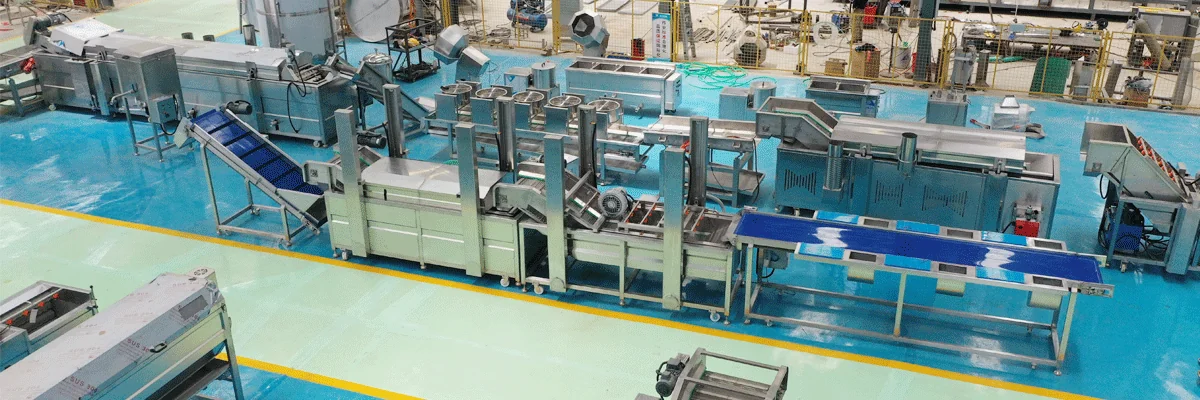
Joyshine's fresh-cut vegetable washing line combines washing, rinsing and dewatering modules. For a salad application, assess the water left on leaves alongside visible damage and the requirements of the next packing step.
What to Measure During a Production Trial
Rather than declaring a machine gentle on appearance alone, compare samples taken before washing, after the wash tank, after rinsing and after dewatering. Use the same crop batch when possible and record the change whenever a setting is adjusted.
| Check | What to look for | Possible adjustment |
|---|---|---|
| Cleaning | Soil or debris still in leaf folds | Improve turnover or rinse coverage |
| Visible damage | Tears, crushed edges or bruised areas | Reduce agitation, crowding or drop height |
| Flow | Leaves collecting at a corner or outlet | Balance feed rate and conveyor speed |
| Surface water | Excess water before packing | Adjust drainage or dewatering stage |
Change one variable at a time where practical, then review both product condition and cleaning. A setting that protects leaves but leaves sand behind is not a successful result; neither is a clean product with avoidable breakage.
Specify the Line Around Your Lettuce Product
Tell the equipment supplier whether the incoming material is whole-head lettuce, trimmed leaves, cut salad mix, spinach or herbs. Share photos, the expected contamination, target throughput, workshop dimensions and what happens after washing. The Argentina salad washing project illustrates how bubble washing, air drying and cutting can be connected, but it is not a universal recipe for every crop.
Also clarify whether cutting occurs before or after the wash. The answer affects how leaves travel through the water, how they are inspected and how surface water is removed before packing.
Frequently Asked Questions
Should lettuce be washed with the strongest bubble setting?
No. Use enough movement to release contamination and move leaves through the tank, then check for tearing or bruising. Confirm the setting with a representative sample.
Can the same line wash whole lettuce and cut lettuce?
It may be configurable for both, but the feed rate, residence time, agitation and dewatering settings should be tested separately for each product format.
Does gentler washing mean skipping a rinse?
Not necessarily. A controlled rinse can remove loosened material with less mechanical contact than prolonging a turbulent wash. Assess coverage and leaf condition together.
Where should operators look for hidden damage?
Inspect the receiving and transfer points, the tank outlet and the dewatering discharge. Compare samples at each stage to identify where damage first appears.
Plan a Trial With Your Actual Leaves
Reducing leaf damage is a whole-line task: careful feeding, controlled bubble movement, appropriate rinsing and gentle water removal must work together. Record cleaning, visible damage and discharge condition before fixing the final settings.
Contact Joyshine with your lettuce variety, cut size, incoming condition and required throughput to discuss a washing-line trial and configuration.