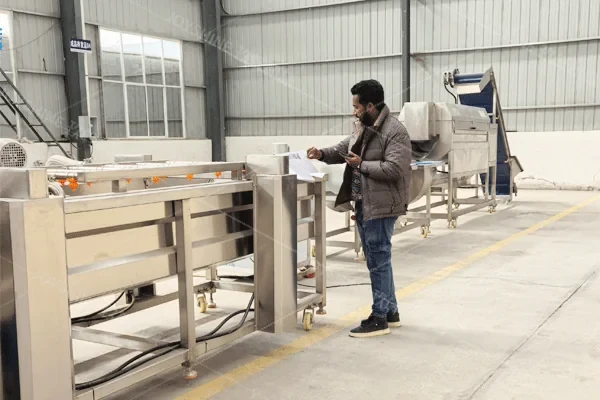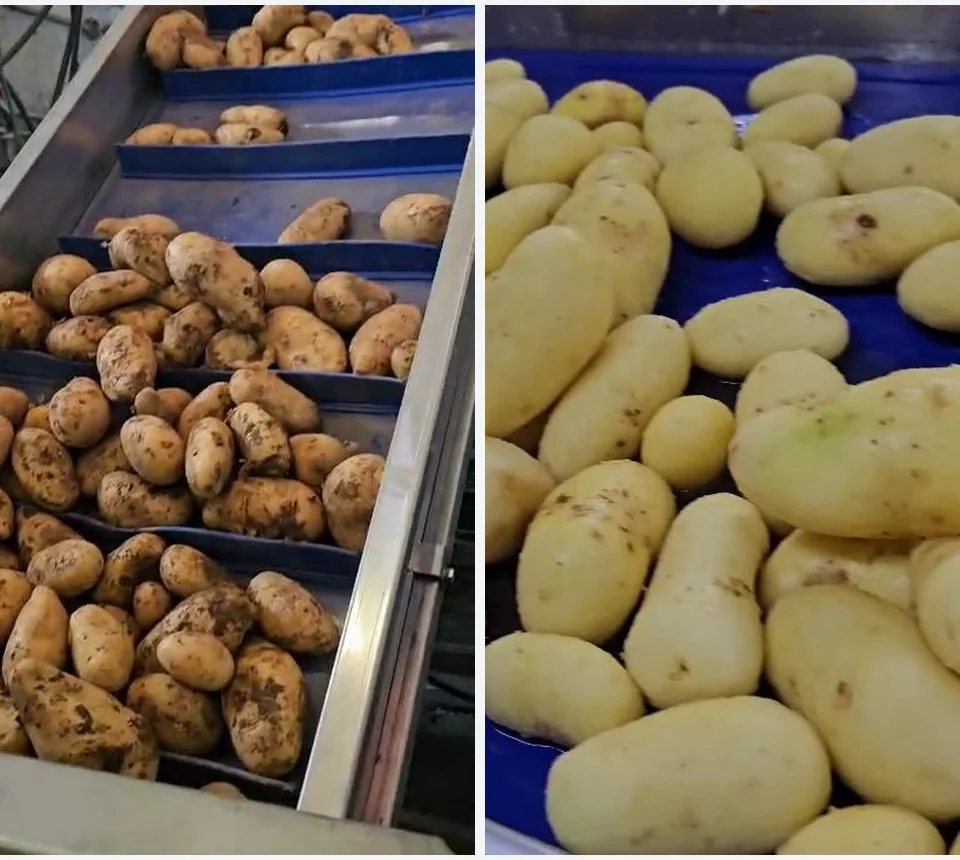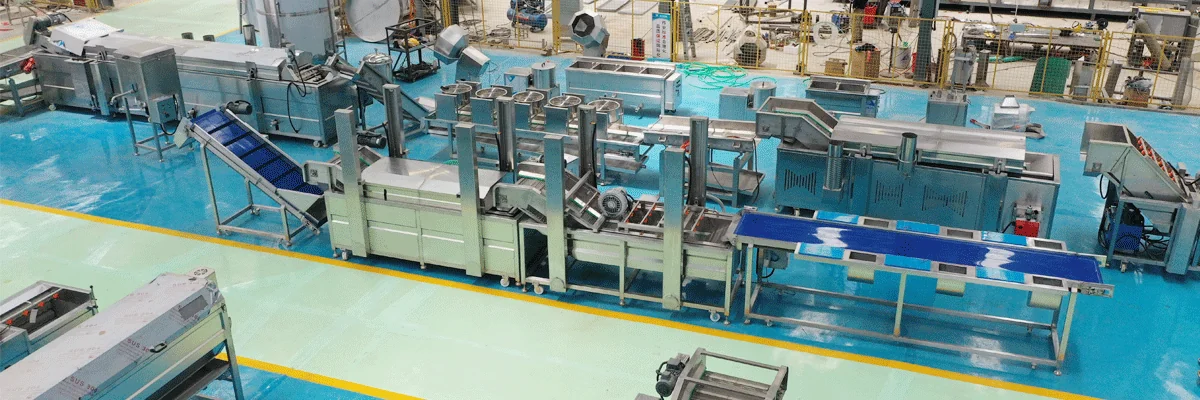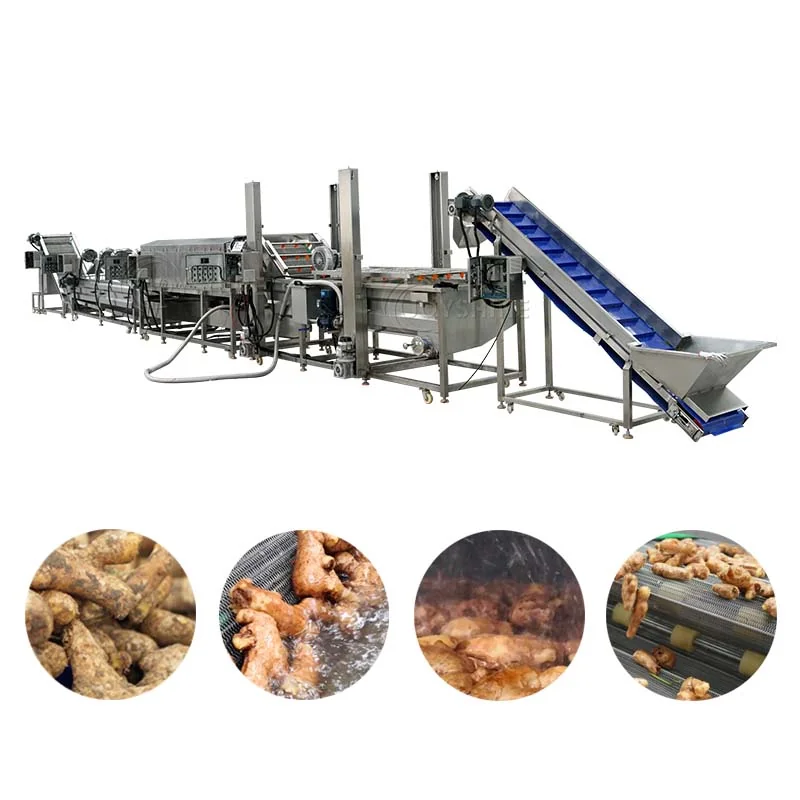
Washing potatoes, carrots, ginger and other root vegetables at industrial scale takes more than a large tank of water. Soil load, irregular shapes, skin sensitivity and the next production step all affect the line design. A practical system moves material continuously from receiving through soil removal, washing, rinsing and inspection to a discharge condition that suits packing or further processing.
This guide focuses on how to build and operate the washing process, rather than the separate question of whether to buy a washer, polisher or peeler. The right sequence and settings should be confirmed using samples of your actual crop.
Start With the Raw Material and the Required Finish
A harvested root may arrive with dry soil, sticky clay, loose stones or dirt trapped in crevices. A potato intended for fresh retail packing needs a different surface finish from a potato headed for peeling and cutting. Branched ginger is harder to reach with a spray alone, while thin-skinned roots may be damaged by aggressive brush contact.
Record the crop varieties, size distribution, incoming contamination and desired condition after washing. Then identify whether the next step is peeling, cutting, drying or packing. Joyshine's root vegetable washing solution combines brush contact, spray rinsing and optional pre-soaking for soil-heavy materials.
| Incoming condition | Process implication | Check during trials |
|---|---|---|
| Sticky mud or clay | Consider pre-soaking and controlled brush contact | Soil removal without excessive abrasion |
| Branched or uneven roots | Improve turnover and spray access | Dirt remaining in recesses |
| Delicate skin | Use gentler brushes and shorter contact | Scuffing and product loss |
| Fresh-market finish | Plan final rinse, inspection and moisture removal | Appearance and pack readiness |
| Downstream peeling | Prioritize soil removal before peeling | Dirt carried into the peeler |
These are selection principles, not fixed machine settings. Trial the combination on representative raw material before specifying the complete line.
Industrial Root Vegetable Washing: Step by Step
A commonly used process is receiving → pre-cleaning → optional soaking → brush washing → spray rinsing → inspection → dewatering or drying → packing or further processing. Not every crop needs every stage. A modular root washing and processing line allows the sequence and transfers to be matched to the factory.
1. Feed and Remove Loose Debris
Use a hopper or elevator to maintain a manageable, even feed rate. Inspect the incoming crop and keep large stones, clods and unwanted material out of the washing section. The feed should avoid sudden surges that prevent roots from turning or passing through the machine uniformly.
If several root types share the line, account for their different sizes and handling behavior when choosing belts, openings and transfer heights. Specify capacity in kg/h of incoming raw material, not only finished-pack weight.
2. Pre-Soak When Soil Is Difficult to Release
Pre-soaking is an option for heavily soiled roots. Water softens adhered mud before mechanical cleaning, but soaking time and agitation should be tested against the crop and the actual soil. Avoid assuming that longer soaking always improves performance; the desired result is loosened dirt with acceptable product condition.
3. Apply Brush or Roller Washing
Rotating brushes make contact with uneven surfaces while water carries loosened dirt away. Brush material, stiffness, roller speed and residence time affect both cleaning and potential surface wear. For ginger, turmeric and other irregular roots, observe whether the material turns sufficiently to expose recessed areas. For sensitive sweet potatoes or retail-bound roots, check for scuffing.
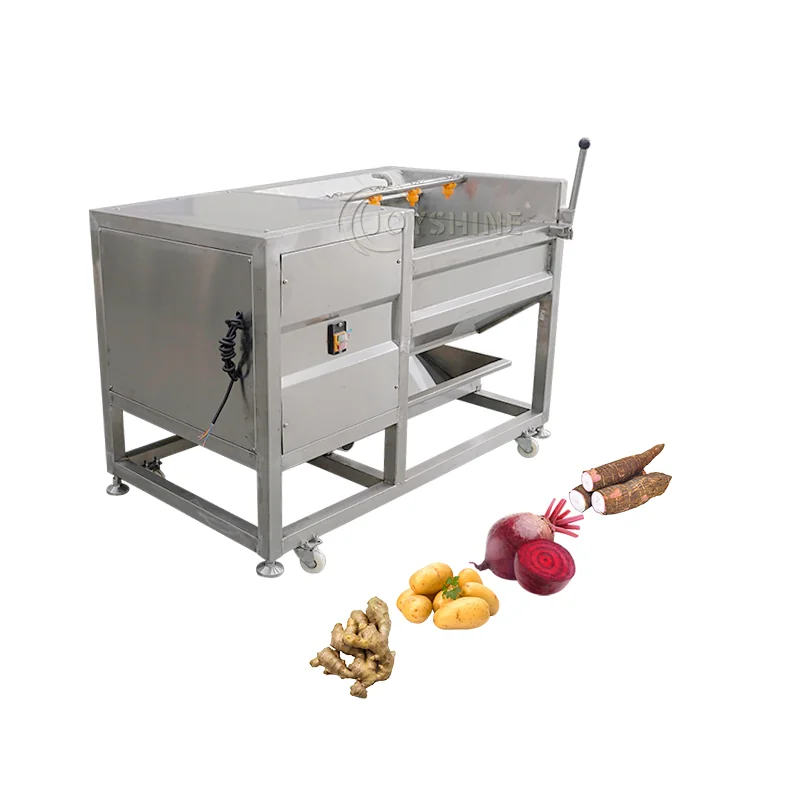
A brush washer can also polish or remove loose skin. If you need a clear distinction between those outcomes and peeling, see our washer vs polisher vs peeler guide. Washing should not unintentionally remove more skin than the finished product allows.
4. Rinse Off Loosened Soil
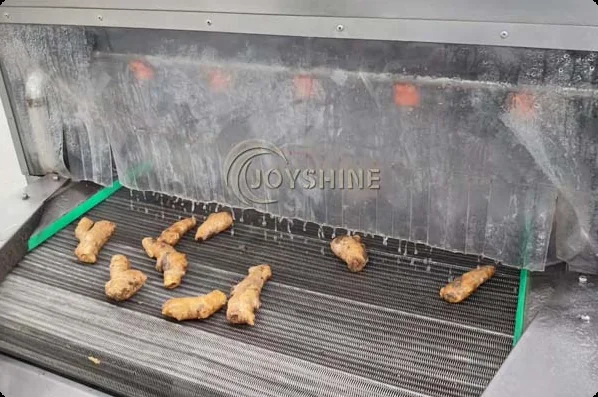
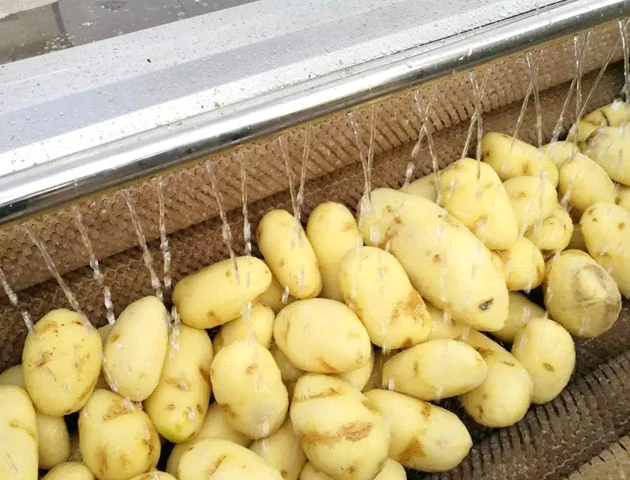
A spray stage helps remove loosened soil before the roots pass to inspection or another machine. Adjust nozzle position, pressure and conveyor speed to cover the product without causing avoidable damage. For irregular roots, verify that the underside and crevices receive adequate exposure; stronger pressure alone is not a substitute for good product turnover.
5. Inspect the Washed Product
Provide space for operators or an appropriate inspection system to identify remaining soil, damaged roots and foreign material. A sample taken only at the beginning of a run can miss changes in soil load or feed rate. Check the washed product at intervals, especially when changing fields, varieties or line settings.
6. Remove Surface Water and Connect the Next Stage
After the final rinse, select dewatering or air drying according to the next operation. Roots going directly into packing may need more surface-water reduction than roots transferring immediately to peeling or cutting. Verify that transfers do not create a new bottleneck and that discharge height matches downstream equipment.
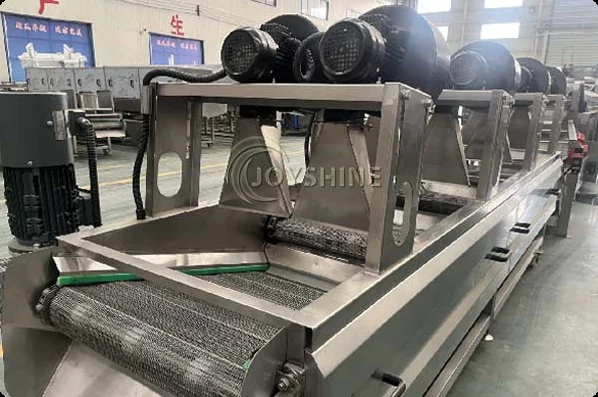
The Dominican Republic potato and carrot washing-and-packing project is an example of how washing, air drying and packing can be connected in one workflow; its configuration should not be treated as universal.
Manage Water, Hygiene and Product Loss Together
Soil removed from roots enters the water system. Design access for cleaning tanks, brushes, conveyors and spray sections, and plan how collected solids are removed. Where water is circulated, filtration may be configured, but the final-rinse water arrangement and cleaning schedule should be set according to the plant's hygiene requirements. Recirculation is not a reason to skip a suitable final rinse.
Track three outcomes during a trial: soil still present after washing, damage or skin loss, and surface water at discharge. Increasing brush contact may improve cleaning while worsening abrasion. A useful trial compares samples before washing, after brush washing and after the final rinse, then adjusts one variable at a time.
Size the Line for the Whole Factory
The nominal washer rate is only one part of capacity planning. Incoming soil load, loading pattern, inspection staffing, water supply, drainage, dewatering and downstream packing can limit sustained throughput. Ask the equipment supplier to check the complete path and confirm dimensions in a technical layout rather than selecting a machine from a headline capacity alone.
Provide the following when requesting a proposal:
- Root type, variety, size range and representative photos or samples.
- Incoming soil condition and any stones or other debris.
- Required kg/h of incoming material and operating hours.
- Desired finished appearance and whether the skin must remain.
- Downstream peeling, cutting, drying or packing process.
- Workshop dimensions, utilities and drainage conditions.
- Requirements for cleaning access and water handling.
Frequently Asked Questions
Should every root vegetable be pre-soaked?
No. Pre-soaking is a configurable step for difficult soil conditions. Test whether the soil releases adequately without it and whether soaking affects the product's desired finish.
Is a higher-pressure spray always better than brushing?
No. A spray can rinse loosened material, while brush contact helps reach soil on rough or irregular surfaces. The best combination depends on the crop, soil and allowable skin wear.
When should peeling be added to the line?
Add peeling when the intended product requires skin removal, not simply because incoming roots are dirty. Wash off heavy soil first; then specify peeling depth and an appropriate downstream rinse.
How can I avoid a bottleneck after washing?
Match conveyors, inspection, drying and packing to the planned sustained intake rate. Trial the full sequence with representative material rather than checking only the washing machine.
Plan Your Root Washing Process
Industrial-scale washing succeeds when the line is tuned to the raw material and the required output, not when every product is forced through the same settings. Start with soil load and skin sensitivity, choose a practical sequence, then validate cleaning, product loss and discharge condition with samples.
Contact Joyshine with your crop, incoming material photos, target kg/h and next production step to discuss a suitable root vegetable washing line.