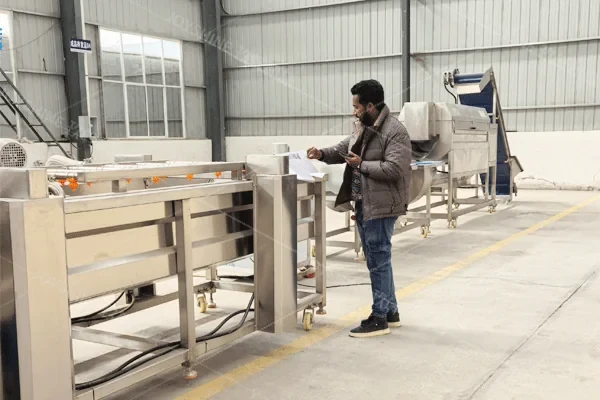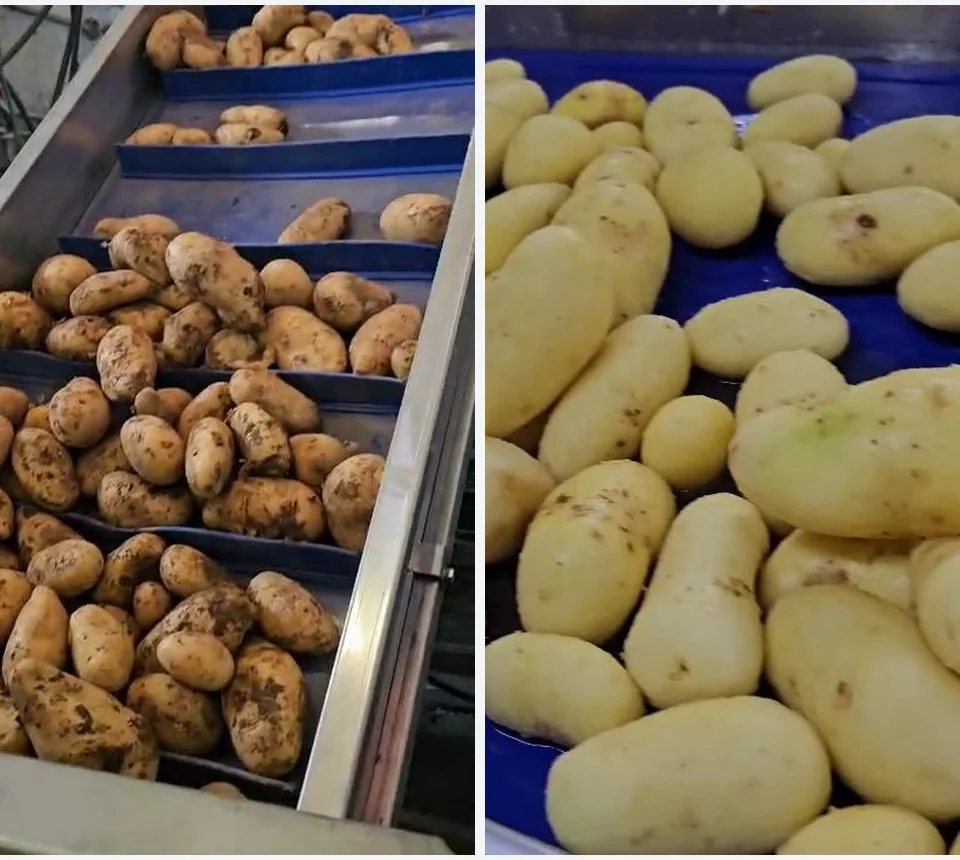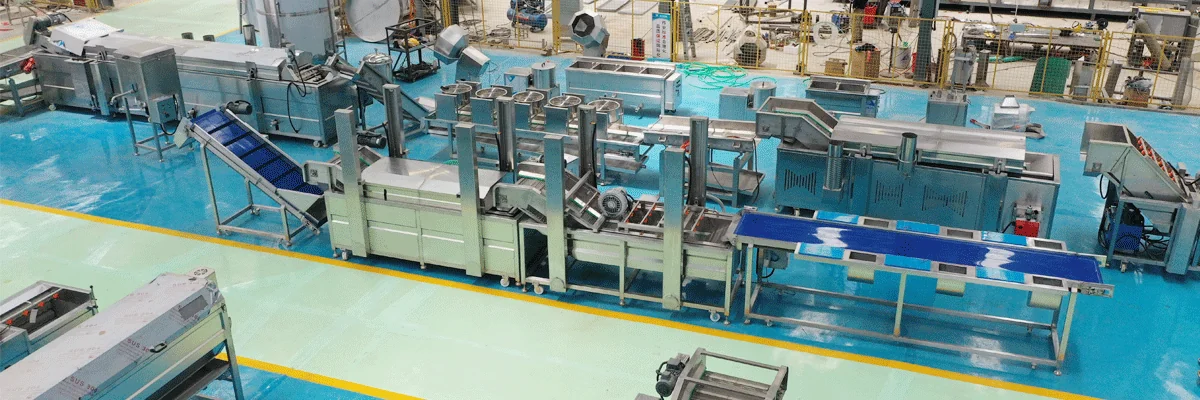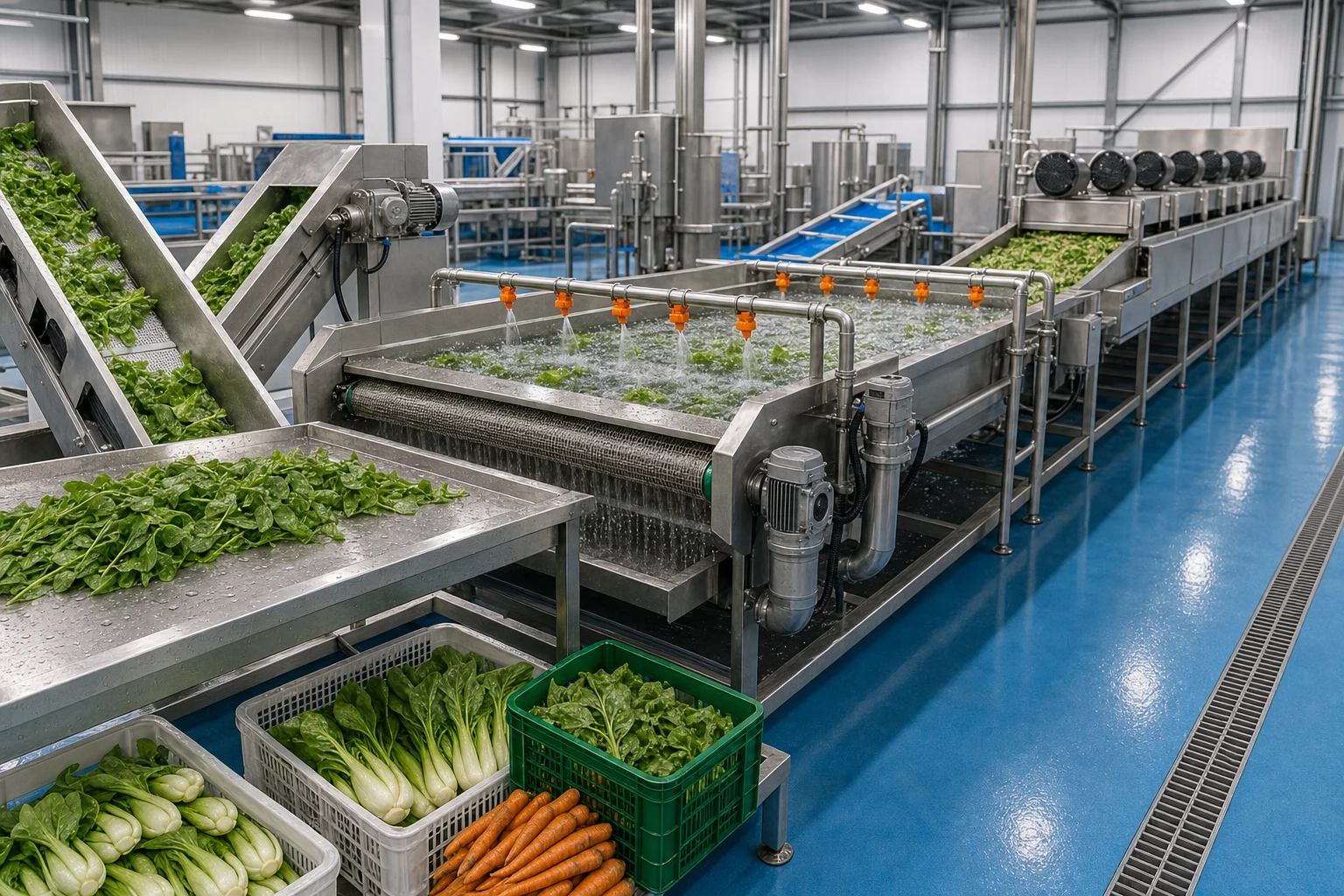
A vegetable washing line is not one single machine. It is a coordinated process that moves raw vegetables from feeding, sorting and washing to water removal and packing preparation. For food factories, the right equipment combination depends on material type, soil level, cutting state, capacity and workshop layout.
Core Sections in a Vegetable Washing Line
Most lines start with a feeding elevator or hopper, followed by a sorting conveyor. The main cleaning stage can use a bubble washing machine, brush washer or spray rinsing section. After washing, factories often add vibration draining, air knife drying or a fruit and vegetable dryer.
- Feeding: controls material flow into the line.
- Sorting: removes damaged leaves, stones and foreign material.
- Washing: removes soil, sand and floating impurities.
- Dewatering: reduces surface water before packing or cutting.
- Inspection: helps keep final quality stable.
How to Choose the Washing Method
Leafy vegetables usually need gentle bubble washing and controlled discharge. Root vegetables need brush contact and stronger spray rinsing. Mixed produce facilities may use modular equipment so the same line can handle different materials. For a complete overview, see our washing lines and application solutions.
Planning Capacity and Layout
Capacity should match the real input condition rather than only the target output. Heavy soil, manual trimming and longer draining time can reduce practical throughput. Before buying, prepare raw material photos, target kg/h, water source, drainage conditions and workshop size.
Joyshine can configure straight, L-shaped or U-shaped layouts for vegetable processors. Send your material and capacity through the contact page to get a practical equipment list.